


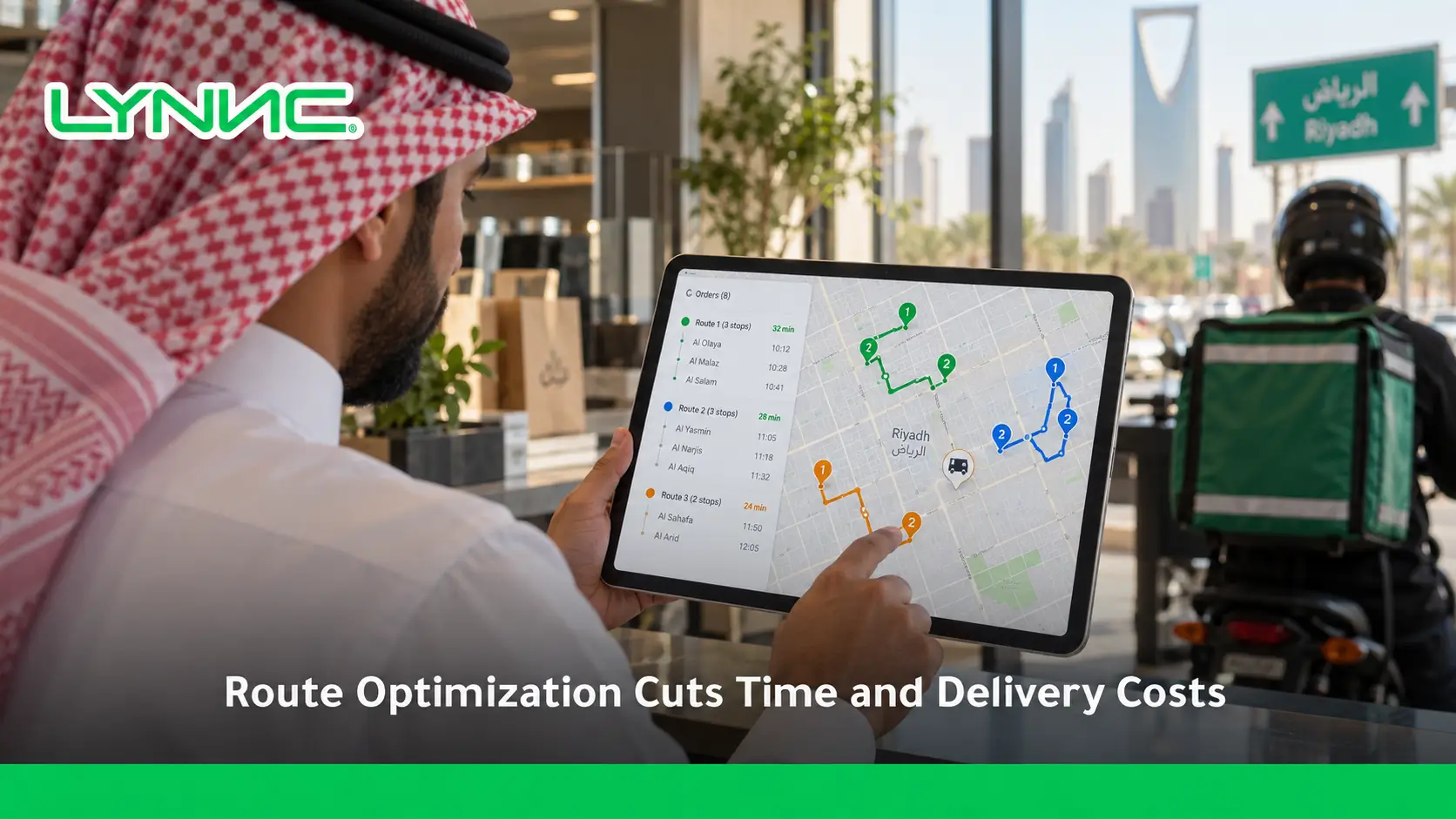
Delivery route optimization plans a sequence of stops using available delivery addresses, time windows, drivers and operating constraints. For restaurant fleets, a route is useful only if it also fits kitchen readiness and delivery demand. More efficient planning may help reduce unnecessary trips, but fuel and timing outcomes depend on real operating conditions.
Route Optimization KPIs for Restaurant Deliveries
Track distance per completed order, average delivery time, late-delivery rate and route changes alongside driver capacity. Compare equivalent periods and service areas before attributing changes to routing. Live driver tracking reports where a driver is; route optimization recommends a plan. Restaurants can review supported planning workflows through LYNNC Fleet Management.
What Is Route Optimization and How Does It Improve Delivery Efficiency?
Technically, route optimization is an algorithmic process that determines the most cost-effective trajectory for a fleet, analyzing variables like traffic, weather, vehicle capacities, and delivery time windows.
Simply put, it is a smart tool that calculates the route plan based on the available constraints for your drivers to take, saving you time and money on every trip.
Here is how it works to improve efficiency:
1. Cost Reduction
- The Mechanism: The software logically groups nearby delivery stops, bypassing congested roads and unnecessary detours to shrink total daily mileage.
- The Impact: This immediately slashes fuel consumption by up to 20% and reduces vehicle wear, prolonging the lifespan of your fleet.
2. Fleet Capacity Maximization
- The Mechanism: Smart algorithms sort and distribute orders based on precise geographic coordinates and the maximum payload capacity of each truck.
- The Impact: Drivers can accomplish significantly more deliveries within their regular shifts, scaling productivity without hiring extra staff.
3. ETA Accuracy
- The Mechanism: The system calculates the Estimated Time of Arrival (ETA) dynamically by monitoring live traffic conditions and actual road speeds.
- The Impact: Deliveries arrive precisely within the customer's expected time window, reducing courier delays and elevating brand trust.
4. First-Time Delivery Success
- The Mechanism: Cloud platforms sync with driver apps to send live tracking links via WhatsApp as the courier approaches the destination.
- The Impact: Customers are alert and ready to receive packages and prepare cash payments, noticeably reducing costly returned shipments.
5. Dynamic Dispatching
- The Mechanism: When urgent orders drop mid-day, the system automatically injects them into the nearest driver’s active route without manual recalculation.
- The Impact: This seamless agility empowers stores and restaurants to offer faster delivery services without ruining pre-planned schedules.
Why Businesses Are Moving Toward Smarter Delivery Route Planning
- Solving Manual Planning Problems: Replacing outdated, paper-based logistics with automated software prevents costly human errors and lost tracking data.
- Meeting Growing Delivery Demands: As e-commerce orders surge, businesses require scalable systems to handle higher volumes without collapsing under pressure.
- Managing Multiple Drivers Seamlessly: Coordinating a growing fleet manually is incredibly difficult; smart routing aligns everyone on a centralized digital map.
- Navigating Complex Delivery Zones: Urban congestion and strict customer time windows demand intelligent systems that can calculate viable, dynamic paths instantly.
- Reducing Logistical Blind Spots: Traditional dispatching lacks real-time visibility, pushing companies to adopt platforms that show exact driver locations.
- Adapting to Urgent Changes: Modern consumer expectations require systems that can instantly adapt to last-minute cancellations or rush orders efficiently.

How Route Optimization Works Behind the Scenes
Behind the scenes, route optimization relies on sophisticated AI and mathematical models to instantly translate complex logistics data into actionable paths. It is not just drawing lines on a map; it involves several precise digital processing stages.
Here is how it works:
1. Data Ingestion & Cleaning
The system pulls delivery requests from your inventory software, instantly cleansing text addresses into highly accurate GPS coordinates. This crucial geocoding step ensures pinpoint accuracy on the digital map before any routing begins.
2. Constraint Mapping
AI applies real-world operational constraints to the map, balancing customer time windows, driver shift hours, and mandatory rest periods. It also monitors vehicle capacities, preventing any truck from exceeding its safe weight and volume limits.
3. The Routing Algorithms
Advanced route optimization platforms can analyze millions of possible route permutations in mere seconds. It identifies the most efficient path that satisfies all constraints while requiring the least amount of fuel.
4. Live Traffic Integration
The routing engine continuously communicates with live traffic databases to monitor road closures, accidents, and sudden congestion. It dynamically reroutes active drivers away from gridlocks to help preserve the calculated arrival times.
5. Instant Dispatch & Sync
The final optimized path is pushed directly to the driver’s mobile app as a sequenced, step-by-step navigation list. Simultaneously, automated WhatsApp alerts share live tracking links with buyers to support a successful first-time delivery.
How Optimized Routes Help Reduce Fuel Usage and Operating Costs
Technically, predictive routing models slash operational overhead by converting chaotic, driver-estimated navigation into mathematically optimized, fully calculated logistical trajectories.
Simply put, smart routing stops drivers from guessing their way around, forcing them onto the shortest, most fuel-efficient paths to save you money.
Here is how it works to provide financial savings:
1. Minimizing Fuel Consumption
- The Mechanism: The routing engine clusters geographically close delivery points into a sequential chain, avoiding overlapping or backtracking.
- The Financial Impact: Shrinking total daily mileage immediately slashes fuel consumption, drastically lowering your monthly energy bills.
2. Reducing Engine Idling
- The Mechanism: Cloud systems leverage live traffic data to steer vehicles entirely clear of major traffic jams and forced detours.
- The Financial Impact: Avoiding long, idle engine running in gridlock preserves fuel and prevents unnecessary mechanical engine stress.
3. Lowering Maintenance Costs
- The Mechanism: Prioritizing the most direct and smooth roads vastly decreases the mechanical pressure and physical strain placed on your vehicles.
- The Financial Impact: Lowering the frequency of oil changes and brake repairs reduces the total cost of ownership significantly.
4. Extending Vehicle Lifespan
- The Mechanism: Keeping fleets on optimized paths prevents rapid vehicle depreciation caused by erratic driving and poor road conditions.
- The Financial Impact: Vehicles remain operational for more years, delaying the heavy capital expenditure required to purchase new delivery trucks.
5. Labor Cost Optimization
- The Mechanism: The algorithms perfectly schedule delivery stops to fit precisely within the drivers' officially allocated working shifts.
- The Financial Impact: Finishing routes strictly on time heavily reduces the financial burden of paying for driver overtime hours.
Key Benefits of Using Route Optimization for Delivery Operations
- More Deliveries Per Day: Highly structured trips allow drivers to fulfill a significantly larger volume of packages effortlessly during their shifts.
- Better Driver Productivity: Removing the stress of manual navigation helps drivers focus on smooth driving and efficient customer handoffs.
- Higher Fleet Visibility: A centralized dashboard empowers dispatchers to track active drivers on live maps, ensuring operations run smoothly.
- Fewer Failed Deliveries: Pre-arrival tracking alerts ensure the buyer is actively waiting at the door, noticeably reducing returned shipments.
- Faster Mid-Day Adjustments: Dispatchers can easily reassign urgent orders to the nearest driver without disrupting the entire operational flow.
- Maximized Payload Capacity: The system intelligently distributes loads based on vehicle size, preventing partially empty trucks from dispatching.
- Reduced Dispatch Confusion: Sending clear, step-by-step lists directly to a driver’s phone eliminates communication errors and verbal misunderstandings.
- Streamlined Handoffs: Knowing exactly when a driver will arrive helps warehouse staff prepare packages in advance to speed up loading times.
How Real-Time Driver Tracking Improves Route Performance
Implementing real-time driver tracking completely elevates route performance, shifting fleet operations from blind waiting into transparent, second-by-second management.
Here is how it works to optimize performance behind the scenes:
1. Geofencing & Variance Alerts
- The Mechanism: The system continuously compares the driver's live GPS location against the mathematically optimized path drawn before departure.
- The Performance Impact: Instant alerts notify managers if a driver deviates unnecessarily, eliminating wasted mileage and enforcing fuel-saving routes.
2. Dynamic Re-routing
- The Mechanism: Intelligent platforms monitor live maps to instantly detect sudden accidents, road closures, or severe traffic bottlenecks.
- The Performance Impact: The AI instantly recalculates and updates the driver's app with a faster detour, protecting packages from severe transit delays.
3. Service Time Optimization
- The Mechanism: The software accurately measures the exact dwell time a vehicle spends idling at a customer’s location during drop-off.
- The Performance Impact: Identifying locations that cause severe delays helps management resolve operational bottlenecks and speed up overall daily workflows.
4. Smarter On-Demand Dispatching
- The Mechanism: When an urgent order drops, the live map identifies the closest active driver who has enough remaining cargo space.
- The Performance Impact: Assigning the task to the most geographically viable driver ensures rapid fulfillment without disrupting the rest of the queue.
5. Automated ETA Updates
- The Mechanism: The tracking system constantly recalculates arrival times and pushes automated WhatsApp updates directly to the waiting customer.
- The Performance Impact: Prepared customers receive packages faster at the door, reducing driver idle times and speeding up the entire route cycle.
Integrating Route Optimization With Fleet Management Systems
Technically, fusing routing algorithms with a holistic fleet management platform centralizes telemetry, spatial data, and mechanical diagnostics into one highly unified operational ecosystem.
Simply put, linking your route planner with your fleet software turns ordinary delivery trucks into highly connected, smart vehicles that run at peak efficiency.
Here is how it works through essential operational pillars:
1. Asset-Aware Routing
The system reads the mechanical health of your vehicles directly from the fleet software, excluding trucks due for maintenance from long, grueling routes. It meticulously balances cargo weights against actual vehicle capacities, shielding your assets from rapid depreciation caused by dangerous overloading.
2. Telematics & Driver Behavior
Fusing routing engines with GPS telematics grants operations managers second-by-second visibility over actual driving habits. It actively logs speeding, harsh braking, and excessive idling, helping enforce safer driving protocols while ensuring adherence to fuel-saving routes.
3. Smart Dispatch Automation
This integration significantly reduces manual dispatching efforts; when a rush order arrives, the cloud platform instantly scans live driver locations. The AI autonomously assigns the package to the closest driver, updating their mobile app instantly without any distracting phone calls.
4. Automated Delivery Loops
The updated path within the fleet system syncs instantly with customer communication channels like WhatsApp to provide real-time updates. This seamless software loop ensures customers are ready for pickup, noticeably reducing delivery failures and enhancing overall route efficiency.
How Route Optimization Enables Faster Deliveries and Better Customer Experiences
Advanced route optimization helps redefine the last-mile experience, transforming standard shipping into a highly proactive service that supports customer retention.
Here is how optimized paths achieve fast deliveries and an exceptional experience:
1. Same-Day Delivery
- The Mechanism: Routing algorithms avoid traffic jams and logically sequence stops to eliminate backtracking and overlapping paths.
- The Impact: Slashing travel time empowers businesses to confidently offer highly profitable, faster delivery and same-day shipping options.
2. Ultra-Accurate ETAs
- The Mechanism: The system calculates arrival times using precise live traffic speeds and average drop-off durations instead of vague estimates.
- The Impact: Customers receive highly specific arrival times, respecting their busy schedules and minimizing the frustration of blind waiting.
3. Transparent Live Tracking
- The Mechanism: Integrating with smart platforms triggers automated WhatsApp messages containing active, highly interactive live map links.
- The Impact: Watching the courier approach in real-time grants buyers peace of mind, noticeably reducing anxious calls to customer support.
4. Flexible Delivery Options
- The Mechanism: Smart notification systems allow buyers to interactively reschedule their delivery or request doorstep drop-offs directly via chat.
- The Impact: The routing engine adapts to these sudden changes seamlessly, ensuring the customer receives their package exactly how they want it.
5. Quality Preservation
- The Mechanism: Algorithms enforce strict time limits on sensitive cargo, ensuring items spend the absolute minimum amount of time in transit.
- The Impact: Hot meals arrive steaming fresh, and fragile goods remain perfectly intact, helping improve customer loyalty and positive brand reviews.
Improve Delivery Operations With LYNNC’s Smart Management Solutions
Efficient delivery requires more than assigning drivers to orders. Businesses need connected systems that improve visibility, simplify fleet coordination, and create smoother delivery workflows.
LYNNC for restaurant technology, businesses can:
- Improve fleet visibility: Monitor delivery operations and gain better control over driver activities.
- Manage orders efficiently: Connect ordering processes with delivery workflows through one centralized platform.
- Enhance driver coordination: Improve communication between teams and drivers for smoother operations.
- Create better customer experiences: Deliver faster and more reliable services with improved operational control.
Ready to optimize your delivery operations and improve fleet performance? Explore LYNNC’s restaurant management software and driver and route management solutions today to build smarter, more efficient delivery workflows.
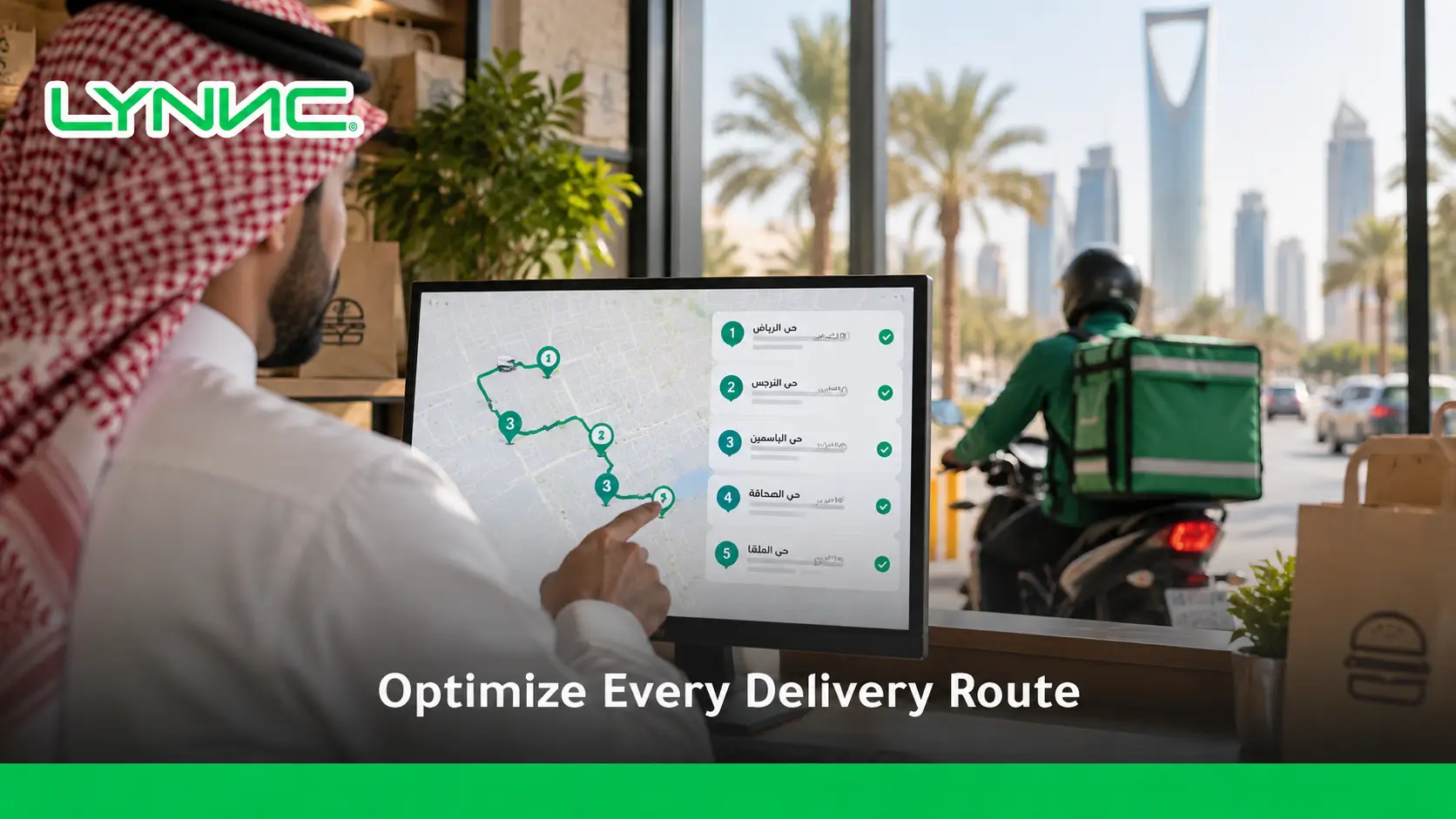
guide to real-Time Driver Tracking for Delivery: Improve Order Visibility
Frequently Asked Questions About Route Optimization
What is route optimization?
It is the algorithmic process of finding the most efficient, cost-effective driving paths for a fleet, considering traffic, capacity, and time windows.
How does route optimization reduce delivery costs?
It dramatically shrinks total mileage and prevents engine idling in traffic, which directly slashes fuel bills and expensive vehicle maintenance costs.
Can route optimization improve delivery speed?
Yes, by eliminating overlapping paths and actively bypassing traffic jams, it drastically cuts transit times to enable same-day shipping services.
What is the difference between route planning and route optimization?
Route planning is just manually mapping stops, while optimization uses AI to mathematically calculate the fastest and cheapest possible sequence.
How does driver tracking support route optimization?
Live tracking ensures drivers strictly follow the calculated paths, instantly alerting managers to unauthorized detours that waste fuel and time.
Can route optimization work with fleet management systems?
Absolutely. Integrating them unifies vehicle health data, live GPS tracking, and smart dispatching to control your entire logistics operation from one dashboard.
Does route optimization help improve customer experience?
When routing is integrated with customer-facing tracking, restaurants may share delivery status and updated estimates. Availability and accuracy depend on the platform and operating conditions.

