


Real-time driver tracking helps restaurant teams follow deliveries using available driver location and status updates. GPS accuracy, refresh frequency, ETA estimates and customer visibility depend on the tracking system and configuration. Linking that information to restaurant order management can make delivery exceptions easier to review.
Real-Time Driver Tracking vs Fleet Management
Driver tracking focuses on seeing available driver locations and delivery statuses. Restaurant fleet management covers a wider operational workflow, which can include dispatch, route planning, driver performance and delivery reporting where supported. Tracking alone does not guarantee an accurate ETA or faster delivery.
When driver tracking is connected to supported fleet and ordering systems, dispatchers can use available delivery status data to investigate delays and coordinate handoffs. Outcomes depend on the system setup, update frequency and actual operating conditions.
What Is Driver Tracking and How Does It Improve Delivery Operations?
Technically, driver tracking utilizes GPS signals and cellular networks to continuously transmit the precise geographical coordinates and telemetry of delivery personnel to a cloud server.
Simply put, it is a smart tool that lets managers and buyers see exactly where a delivery vehicle is on a live map, significantly reducing any guesswork.
Here is how this tracking system accurately improves supply chain operations:
1. Complete Fleet Visibility
- The Mechanism: Cloud platforms give operations managers a centralized dashboard to monitor exact locations and live vehicle speeds accurately.
- The Logistical Impact: This significantly reduces operational blindness, ensuring couriers follow planned routes while detecting any unjustified stops to prevent wasted resources.
2. Dynamic Task Dispatching
- The Mechanism: When an urgent mid-day order arrives, the software analyzes the live map to locate the closest, unburdened courier.
- The Logistical Impact: The system autonomously assigns the task and updates the driver's app, speeding up operations without requiring manual phone coordination.
3. Real-Time ETA Updates
- The Mechanism: The system continuously recalculates the Estimated Time of Arrival (ETA) by factoring in the courier's actual speed and live traffic conditions.
- The Logistical Impact: This helps ensure highly accurate customer promises and triggers proactive alerts to prevent drivers from waiting long at the doorstep.
4. First-Time Delivery Success
- The Mechanism: Live delivery tracking links are sent automatically via WhatsApp, allowing buyers to monitor their approaching courier interactively.
- The Logistical Impact: This visual synchronization helps ensure customers are home and ready with cash payments, drastically reducing the rate of returned shipments.
5. Driver Behavior Analytics
- The Mechanism: Smart telematics sensors record precise driving habits, including severe speeding, harsh braking, or prolonged engine idling.
- The Logistical Impact: Management uses this data to train staff, lowering fuel consumption, preventing accidents, and extending the lifespan of fleet vehicles.

Why Businesses Need Real-Time Visibility Across Their Delivery Fleet
- No Driver Visibility: Without live tracking, dispatchers suffer from operational blind spots, unable to verify if drivers are on the correct routes or stuck in traffic.
- Delayed Responses: Lack of real-time data forces support teams to make time-consuming phone calls to locate drivers, delaying customer updates significantly.
- Manual Coordination: Relying on paper or verbal dispatching creates logistical chaos, especially when trying to assign sudden mid-day rush orders.
- Customer Uncertainty: When buyers are kept in the dark about their delivery status, it leads to frustrating blind waiting and missed handoffs.
How Real-Time Driver Tracking Works Behind Modern Delivery Systems
Real-time driver tracking relies on a highly synchronized network of software and geographic sensors to function seamlessly behind the scenes.
It is not just a dot on a map; it involves several precise, split-second technical stages to transmit data accurately.
Here are the detailed technical stages that make this system work:
1. GPS Data Acquisition
- The Action: The cycle begins with the driver's mobile phone or the vehicle's embedded telematics system connecting to global satellites.
- The Result: It captures exact latitude, longitude, movement direction, and current speed with absolute precision.
2. Data Transmission via Cellular Networks
- The Action: Once coordinates are captured, the app instantly compresses and transmits this telemetry via 4G or 5G networks to cloud servers.
- The Result: This rapid transmission occurs every few seconds to ensure a continuous, uninterrupted live data flow.
3. Cloud Processing & Geofencing
- The Action: Cloud servers ingest this data stream, matching it against digital maps and activating intelligent virtual boundaries around locations.
- The Result: When a driver breaches this geofence, the system automatically registers the arrival without requiring manual driver confirmation.
4. Dynamic ETA Calculation
- The Action: The servers pass the live coordinates into advanced mapping engines, combining them with actual live traffic conditions.
- The Result: The system recalculates the ETA second-by-second, proactively detecting and navigating around sudden traffic jams to maintain accuracy.
5. Multi-End Synchronization
- The Action: In the final step, the system simultaneously broadcasts the processed logistical data to two distinct interfaces.
- The Result: Managers view the live dashboard to monitor compliance, while customers receive an automated WhatsApp map link to track their delivery.
The Main Advantages of Using Driver Tracking for Daily Operations
- Fleet Productivity: Automated dispatching allows dispatchers to seamlessly assign tasks to the closest available drivers, maximizing the daily volume of completed deliveries.
- Driver Performance: Continuous monitoring discourages unnecessary loitering and helps ensure strict adherence to planned, time-saving routes.
- Fuel Control: Identifying excessive engine idling and correcting harsh driving behaviors helps management cut down on wasted fuel and lower energy expenses.
- Operational Reports: Logging precise departure and dwell times provides management with the hard, data-driven numbers needed to streamline workflows and boost revenue.
How GPS Tracking Helps Improve Fleet Performance and Delivery Control
gps tracking fleet management transitions operations from a system of guesswork into a highly controlled digital ecosystem helping ensure absolute oversight.
This direct connection grants managers unprecedented control over service quality, massively boosting the overall efficiency of the entire fleet.
Here is exactly how this tracking technology elevates fleet performance:
1. Strict Route Compliance
- The Control Mechanism: The tracking system continuously compares the vehicle's actual driven path against the mathematically optimized route generated beforehand.
- The Performance Impact: If a driver takes unauthorized detours, the system triggers instant alerts, successfully eliminating wasted mileage and reducing fuel costs.
2. Dynamic Fleet Load Balancing
- The Control Mechanism: The central live dashboard displays the real-time locations and remaining cargo capacities of all active trucks simultaneously.
- The Performance Impact: This prevents operational overlap by distributing new shipments to strategically positioned vehicles, maximizing the entire fleet's output.
3. Automated Geofencing Controls
- The Control Mechanism: GPS technology allows management to draw invisible, smart virtual boundaries around warehouses and specific customer locations.
- The Performance Impact: Entering a geofence automatically logs precise arrival and dwell times, providing tamper-proof data that protects company credibility.
4. Real-Time Dispatch Control
- The Control Mechanism: The system merges live telemetry with active traffic maps to instantly detect sudden accidents or severe road blockages.
- The Performance Impact: Dispatchers can instantly reroute drivers away from gridlock, updating their apps immediately to protect packages from delays.
5. Fleet Analytics
- The Control Mechanism: GPS systems meticulously record exact operating hours, total daily mileage, and engine idling durations for every vehicle.
- The Performance Impact: These metrics generate reports identifying fuel-wasting vehicles and slow delivery zones, enabling data-backed operational improvements.
Connecting Driver Tracking With Fleet Management Systems
Fusing driver tracking technology with a comprehensive Fleet Management System is the foundation for transforming ordinary vehicles into connected units.
Instead of monitoring locations in isolation, this integration centralizes logistics, telemetry, and mechanical data into one powerful dashboard for absolute control.
Explore how this technical integration operates across essential logistical pillars:
1. Asset-Aware Routing
- The Mechanism: This integration allows routing algorithms to instantly read the mechanical status of every vehicle directly from the fleet software.
- The Impact: The system automatically excludes vehicles requiring maintenance from demanding routes while perfectly balancing parcel weights to prevent dangerous overloading.
2. Telematics & Driver Behavior
- The Mechanism: Merging live tracking with advanced telematics grants management second-by-second visibility into actual driving habits and road compliance.
- The Impact: The system actively logs severe speeding and harsh braking, significantly reducing unauthorized detours and enforcing strict fuel-saving protocols.
3. Smart Dispatch Automation
- The Mechanism: When urgent orders drop, the cloud engine analyzes the live map and autonomously assigns the task to the closest driver.
- The Impact: This greatly reduces the need for manual, paper-based dispatching, updating driver apps instantly without any distracting phone calls.
4. Automated Delivery Loops
- The Mechanism: The live route within the fleet system syncs seamlessly with customer communication channels like WhatsApp in real time.
- The Impact: The system recalculates highly accurate ETAs and sends live tracking links, significantly lowering the rate of failed deliveries.
How Driver Tracking Creates Faster Deliveries and Better Customer Experiences
Real-time driver tracking elevates the delivery process from a blind logistical transaction into a highly interactive, lightning-fast customer experience.
It greatly reduces wait-time anxiety by granting the buyer total transparency over their package's location and arrival time.
Discover how tracking systems achieve record-breaking delivery speeds and exceptional user satisfaction:
1. Live Tracking
- The Mechanism: Once dispatched, the system sends an automated WhatsApp message containing a highly interactive, real-time map link.
- The Impact: Watching the courier approach step-by-step empowers the customer and significantly reduces frustrating calls to support for status updates.
2. Accurate ETA
- The Mechanism: The system dynamically recalculates the ETA second-by-second using the vehicle's true speed and live traffic data.
- The Impact: Providing an exact arrival time deeply respects the customer's busy schedule and helps ensure brand professionalism.
3. Less Waiting
- The Mechanism: Advanced cloud systems utilize smart geofencing to trigger automated alerts when a courier is exactly five minutes away.
- The Impact: This proactive alert helps ensure the buyer is waiting at the door, minimizing driver wait times and speeding up overall routes.
4. Better Satisfaction
- The Mechanism: Tracking interfaces integrate two-way communication tools, allowing buyers to instantly request a reschedule or seamless drop-off adjustment.
- The Impact: Meeting the customer's exact delivery preferences on the fly builds long-term loyalty and drives highly positive brand reviews.
How Restaurants Can Use Driver Tracking to Improve Daily Operations
driver tracking technology shifts daily LYNNC restaurant operations platform from chaotic guesswork into a highly precise digital ecosystem helping ensure food quality.
This accurate geographical synchronization helps ensure maximum operational efficiency, reducing dispatcher confusion and significantly lowering courier wait times.
Here is how restaurants can leverage this technology to enhance their daily performance:
1. KDS and Dispatch Synchronization
- The Usage: Tracking systems can integrate with restaurant technology platforms to connect kitchen, order, and delivery workflows.
- The Daily Impact: Tapping "ready" in the kitchen instantly summons the closest driver, preventing hot meals from deteriorating on assembly shelves.
2. Smart Order Dispatching
- The Usage: The restaurant's central dashboard continuously displays the exact live locations of all active couriers on a digital map.
- The Daily Impact: Sudden web orders are automatically assigned to the most geographically viable driver, significantly reducing chaotic phone coordination.
3. Reducing Branch Congestion
- The Usage: Geolocation technology precisely calculates the returning ETA of drivers heading back to the main restaurant branch.
- The Daily Impact: Chefs know exactly when a driver will arrive, allowing them to time meal completions and stop couriers from loitering.
4. Geofencing for Quality Control
- The Usage: The software draws intelligent, invisible virtual boundaries directly around the customer’s exact residential location.
- The Daily Impact: Breaching this zone triggers a WhatsApp alert, helping ensure the customer is at the door to receive their food piping hot.
5. Delivery Analytics
- The Usage: The system meticulously records the exact dispatch time, total transit duration, and final delivery second for every single order.
- The Daily Impact: These analytics empower management to identify highly efficient drivers and pinpoint chronic delay zones, driving smarter labor scheduling.
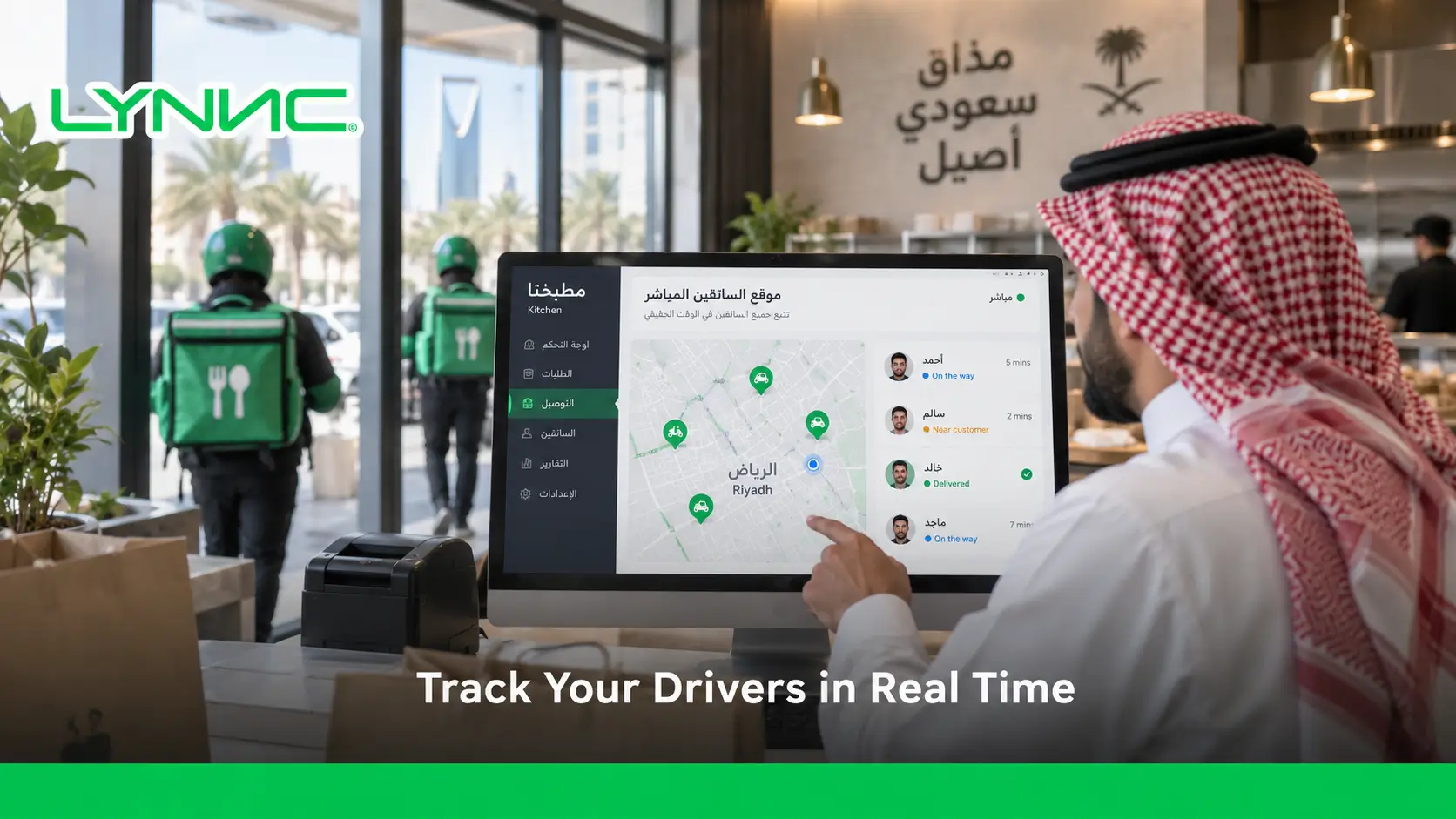
Improve Delivery Visibility With LYNNC’s Smart Restaurant Management Solutions
Efficient delivery requires more than assigning drivers to orders. Businesses need connected systems that improve visibility, simplify fleet coordination, and create smoother delivery workflows.
With LYNNC, businesses can:
- Manage delivery operations: Gain full control over dispatching and monitor active fleets in real time.
- Improve driver coordination: Greatly reduce manual phone calls by automating task assignments and route updates directly to drivers.
- Connect orders and delivery workflows: Sync kitchen preparation times with driver arrivals to help ensure ultimate food freshness.
- Increase operational visibility: Utilize precise tracking data to eliminate bottlenecks and build a more reliable customer experience.
Ready to optimize your delivery operations and improve fleet performance? Explore LYNNC’s restaurant operations management software and last-mile delivery managementsolutions today to build smarter delivery operations.
For more context, see Fleet Management KPIs for Restaurant Delivery Teams to Track.
Frequently Asked Questions About Driver Tracking
Can both the customer and restaurant monitor the driver’s location simultaneously?
Yes, modern tracking systems broadcast data to a central dashboard for managers while sending an interactive live map link to customers.
What is real-time driver tracking?
It is a logistical technology using GPS and cellular networks to continuously monitor and broadcast a delivery vehicle's exact location.
How does GPS tracking improve delivery operations?
It enforces strict route compliance, helps prevent unauthorized detours, and enables intelligent dispatching, which drastically reduces fuel waste.
Can driver tracking reduce delivery delays?
Absolutely. By monitoring live traffic and recalculating ETAs, the system can instantly reroute drivers away from accidents to help ensure prompt arrivals.
How does driver tracking work with fleet management systems?
It feeds live location and telemetry data into the central fleet software, combining route tracking with mechanical health analysis.
Does driver tracking improve customer experience?
Where customer-facing tracking is supported, it can make delivery progress easier to follow. Arrival estimates may change and depend on the availability and accuracy of tracking data.

