


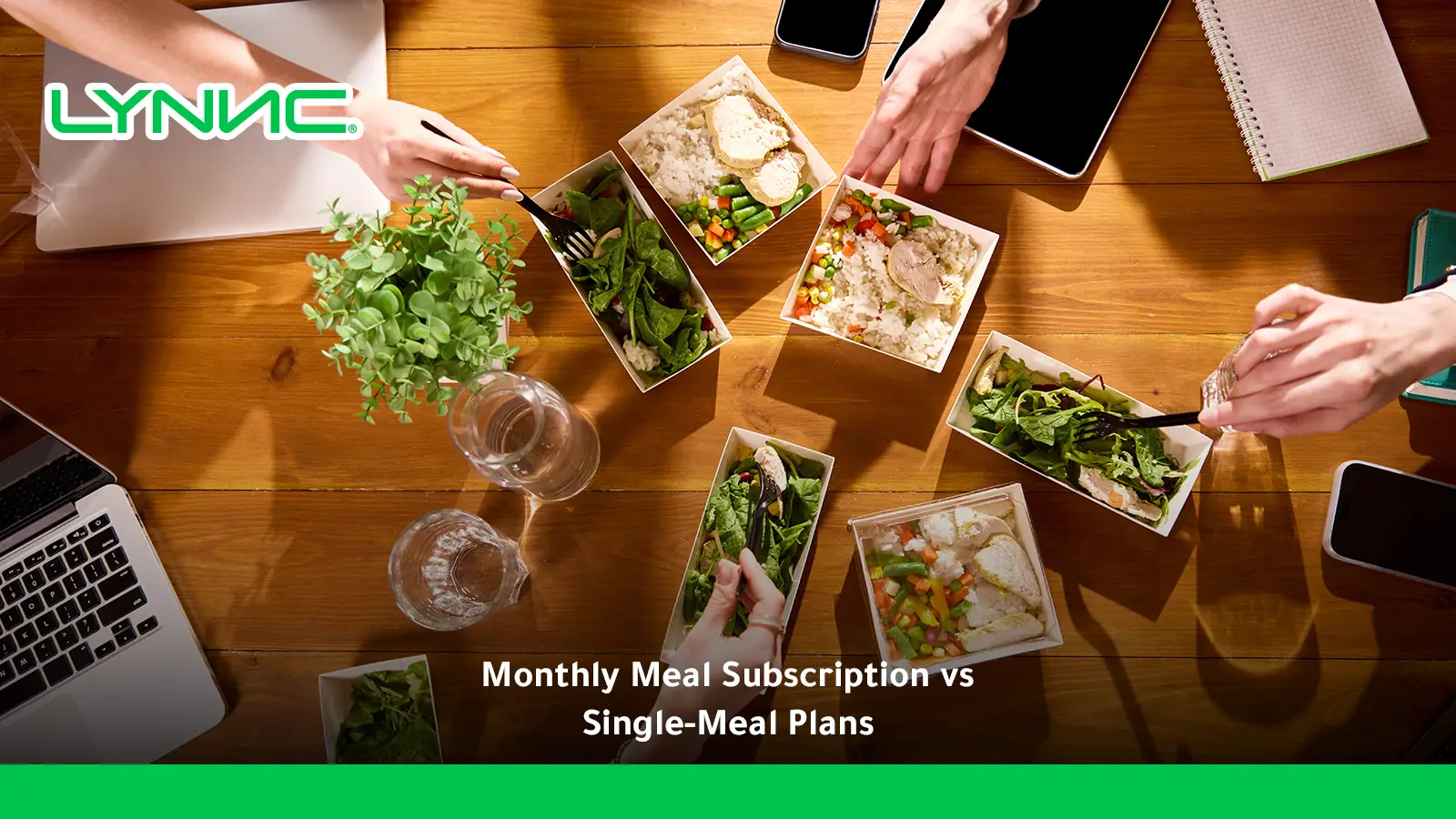
Monthly meal subscription plans give restaurants a recurring schedule of prepaid or committed meals, while single-meal plans let customers order only when needed. The right model depends on customer frequency, pricing, operational capacity, food costs, delivery economics, and retention. Subscriptions can improve demand visibility and planning, but they also create commitment and fulfilment obligations. Single-meal plans offer flexibility, while hybrid models can serve customer segments without forcing one purchasing pattern.
What Is a Monthly Meal Subscription Plan?
A monthly meal subscription plan lets a customer commit to a recurring package of meals for a defined monthly price, quantity, schedule, or allowance. Instead of making a new purchase decision for every meal, the customer follows an agreed plan that renews or runs for a specified period.
For restaurants, monthly meal subscription plans can create a more visible base of future orders because part of demand is known before each individual meal is prepared.
The exact structure can vary. A plan might include weekday lunches, a fixed number of monthly meals, full-day packages, healthy-meal programmes, or different allowance tiers designed around customer usage.
The important distinction is that the restaurant is managing an ongoing customer relationship rather than a series of unrelated transactions.
What Is a Single-Meal Plan?
A single-meal plan is a transactional model in which the customer chooses and pays for each meal separately without committing to a recurring package. Revenue is generated only when the customer decides to place another order.
This model gives customers maximum flexibility because they can change restaurants, menu items, order frequency, and spending from one purchase to the next.
For the restaurant, however, future demand is less certain. Production, purchasing, staffing, and delivery capacity must rely more heavily on forecasts and historical order behaviour rather than already committed meal volumes.
Monthly Meal Subscription vs Single-Meal Plans
Monthly meal subscription plans exchange some customer flexibility for greater demand visibility and recurring relationships, while single-meal plans maximise purchase flexibility but leave future orders less certain.
The main differences are clearer side by side:
Pricing
Subscription pricing normally packages a recurring quantity or entitlement into one price, while single-meal pricing assigns a price to each individual purchase. The right structure depends on how consistently customers consume the service and how variable the restaurant’s fulfilment costs are.
- Monthly model: Price the full package around expected meal usage, food cost, packaging, delivery, payment fees, and an acceptable contribution margin.
- Single-meal model: Protect the economics of each transaction independently without depending on future purchases to recover today's discount.
- Plan tiers: Different allowances can serve customers with different meal frequencies rather than forcing everyone into one package.
- Overages and add-ons: Restaurants can decide whether meals beyond the package are purchased separately instead of increasing the base subscription for everyone.
Revenue Predictability
Subscriptions usually give restaurants greater visibility into committed revenue because customers have an ongoing billing relationship, whereas single-meal revenue depends on customers returning and ordering again. For a deeper operating model, see how monthly meal subscriptions and recurring revenue are connected through renewals and predictable ordering.
- Subscription advantage: Active plans provide a clearer starting point for estimating revenue over the next billing period.
- Single-meal limitation: Historical demand can support forecasting, but it does not guarantee another transaction.
- Important distinction: Predictable revenue does not automatically mean predictable profit if fulfilment costs or customer usage exceed assumptions.
Customer Commitment
A monthly subscription asks customers to make a larger commitment than a single meal, so perceived value, convenience, flexibility, and trust become more important to the buying decision.
- Subscription customers: Need enough recurring value to justify staying enrolled beyond the initial purchase.
- Single-meal customers: Can make each purchase according to immediate need without worrying about unused meals.
- Flexibility: Pause, skip, change, or cancellation options can make a subscription more suitable for customers whose routines change.
Operational Planning
A recurring subscription base can make operational planning easier because part of upcoming meal demand is visible before service starts, while single-meal plans create more day-to-day variability.
- Production planning: Known subscriber volumes can help define a baseline number of meals to prepare.
- Labour scheduling: Kitchens can align staff with committed demand before adding expected single-order volume.
- Delivery planning: Recurring delivery days and locations can support earlier capacity and route planning.
- Capacity control: The restaurant still needs limits so subscription commitments do not exceed realistic kitchen or delivery capacity.
Ingredient Forecasting
Monthly subscriptions can improve ingredient forecasting when the restaurant knows meal quantities and selections before purchasing, while single-meal demand generally requires a larger forecasting component.
- Known demand: Confirmed subscription meals create an initial requirement for ingredients before projected walk-in or single-order demand is added.
- Menu standardisation: Structured meal plans can make purchasing more predictable when subscribers choose from a controlled menu.
- Choice timing: Forecasting becomes less useful if subscribers can change meal selections immediately before preparation.
- Waste control: Better visibility helps, but restaurants still need safety stock and forecasting for cancellations, swaps, and unpredictable one-off orders.
Which Model Is Better for Different Customer Segments?
Monthly meal subscription plans are usually better suited to customers with frequent and predictable meal needs, while single-meal plans fit customers whose schedules, preferences, or purchase frequency change regularly.
The model can therefore be matched to the behaviour of each customer segment:
Segmentation should therefore be based on actual ordering frequency, price sensitivity, meal routine, and flexibility needs rather than assuming every frequent customer wants a subscription.
Can Restaurants Offer Both Models?
Yes. Restaurants can combine subscriptions and single-meal purchasing in a hybrid model, allowing frequent customers to commit to a recurring plan while keeping the restaurant accessible to occasional customers.
This approach can be structured in several ways:
- Subscription plus one-off meals: Subscribers receive their included meals but can purchase extra meals separately.
- Single-meal entry point: New customers can order normally before deciding whether a monthly plan fits their routine.
- Multiple subscription tiers: Customers can choose between smaller and larger meal allowances instead of one fixed package.
- Flexible upgrades: A regular customer can move from single orders into a recurring plan when their order frequency increases.
- Pause or skip options: Temporary flexibility can reduce the need for customers to cancel the entire subscription when their schedule changes.
- Separate premium purchases: Special meals, extras, or upgrades can remain outside the included allowance.
A hybrid model should remain simple enough for customers to understand and for the restaurant to operate without creating excessive pricing, billing, and fulfilment complexity.
KPIs for Comparing Subscription Models
Restaurants should compare monthly meal subscription plans and single-meal models using profit, retention, demand, usage, and operational metrics together. Revenue alone can hide problems such as underpriced subscriptions, high delivery costs, unused capacity, or poor customer retention.
The most useful KPIs include:
- Subscription renewal rate: Measures how many eligible subscribers continue into another billing period.
- Subscription churn: Tracks the share of subscribers who cancel or fail to renew.
- Repeat order rate: Shows how often single-meal customers return for another transaction.
- Revenue per customer: Compares how much revenue each customer generates over the selected period.
- Contribution margin per customer: Measures revenue after relevant food, packaging, payment, fulfilment, and discount costs.
- Meal utilisation: Tracks how much of a subscriber’s included meal allowance is actually consumed.
- Average order value: Helps evaluate spending behaviour among single orders and any subscription add-ons.
- Customer lifetime value: Estimates the economic value generated across the customer relationship rather than one transaction.
- Acquisition payback: Measures how long it takes the contribution from a customer to recover acquisition spending.
- Forecast accuracy: Compares predicted meal volume with actual production and fulfilment requirements.
- Food waste: Helps reveal whether better subscription visibility translates into more efficient ingredient purchasing.
- Delivery cost per meal: Identifies whether recurring deliveries produce acceptable economics or make the plan too expensive to fulfil.
The strongest model is the one that produces sustainable contribution after fulfilment costs, not simply the one with the highest headline revenue or largest number of subscribers.
How LYNNC Supports Meal Subscription Management
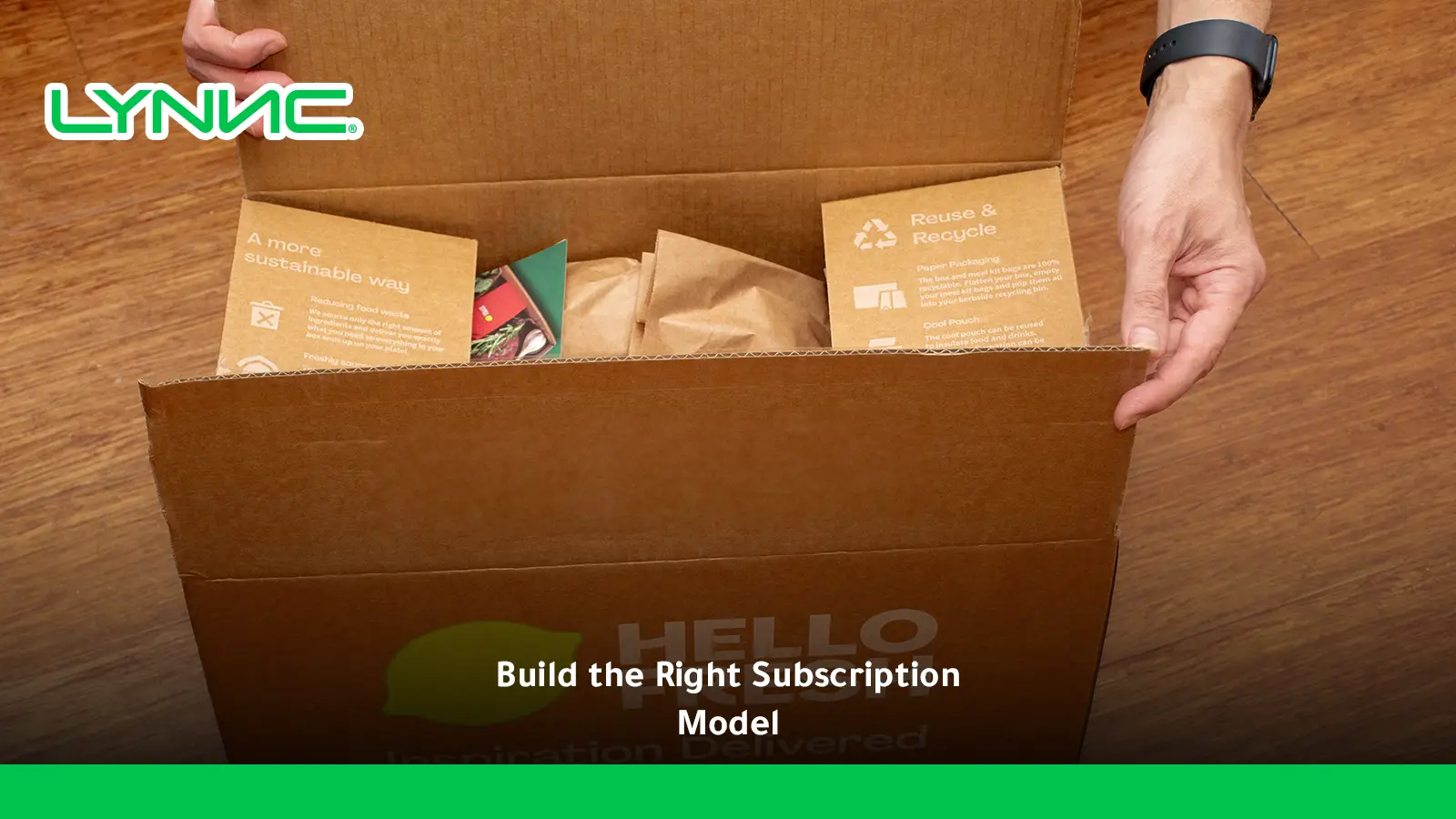
LYNNC provides meal subscription functionality with weekly and monthly options, meal selection, delivery scheduling, and controls that allow customers to modify, pause, or cancel subscriptions. The platform also supports different meal-plan formats rather than forcing every customer into one package.
This can support restaurants that want to combine recurring meal plans with a wider digital operating model:
- Flexible plans: Restaurants can structure recurring packages around weekly or monthly schedules.
- Meal selection: Customers can choose meals and define delivery timing and location.
- Subscription control: Pause and modification options give customers more flexibility around changing routines.
- Recurring fulfilment: Known subscription demand can sit alongside the restaurant’s wider order and delivery operations.
Restaurants looking for a broader technology environment can explore LYNNC’s (restaurant software) alongside its dedicated subscription capabilities.
Choose the Model Around Customer Behaviour and Unit Economics
Monthly meal subscription plans work best when customers order frequently enough to value recurring convenience and when the restaurant can price, prepare, and deliver those meals at a sustainable contribution margin. Single-meal plans remain stronger where demand is irregular or customers place greater value on flexibility.
Restaurants do not have to choose one model for every customer. A hybrid structure can use single orders as the low-commitment entry point and subscriptions for segments with repeatable meal routines.
The decision should ultimately come from customer behaviour and unit economics: compare retention, utilisation, revenue, ingredient costs, fulfilment costs, and contribution margin before deciding which model deserves more capacity.
Ready to build recurring meal plans around real customer demand? Explore LYNNC’s (Meal Subscription System) to see how weekly and monthly plans, meal selection, delivery scheduling, and subscription controls can fit into a structured recurring ordering experience.
Monthly Meal Subscription Plans: Common Questions
Which subscription model yields higher profit margins for cloud kitchens?
Neither model automatically produces the higher margin. A monthly subscription can improve demand visibility, production planning, and repeat revenue, but poor pricing, heavy meal utilisation, delivery costs, or low retention can reduce profitability. Single meals may preserve a stronger margin per transaction but provide less predictable demand. Compare contribution margin per customer and per meal before choosing.
Are monthly subscriptions more profitable than single orders?
Not necessarily. Profitability depends on the subscription price, actual meal usage, food cost, packaging, delivery, discounts, and retention. Research on subscription delivery models shows that higher purchase frequency does not automatically translate into higher profit when fulfilment behaviour becomes more expensive.
Should a new restaurant launch subscriptions immediately?
Usually, it is safer to understand repeat-order behaviour and unit economics first. Single orders can show which customers buy frequently, which meals repeat well, and what fulfilment costs actually look like before those assumptions are built into a recurring package.
How many meals should a monthly plan include?
There is no universal number. The allowance should reflect the target customer’s normal meal frequency, price sensitivity, kitchen capacity, and contribution margin. Offering more than one tier can serve customers with different consumption levels more effectively than one fixed allowance.
Can subscribers still buy individual meals?
Yes. A hybrid structure can let subscribers purchase additional meals, premium items, or extras separately. This preserves flexibility and can prevent the base subscription from becoming unnecessarily large or expensive.
What is the biggest financial risk of a meal subscription?
Underpricing recurring fulfilment is one of the main risks. A plan may look attractive when sold but become unprofitable if subscribers consume heavily, delivery costs rise, or the package includes too much value relative to its recurring fee.

