


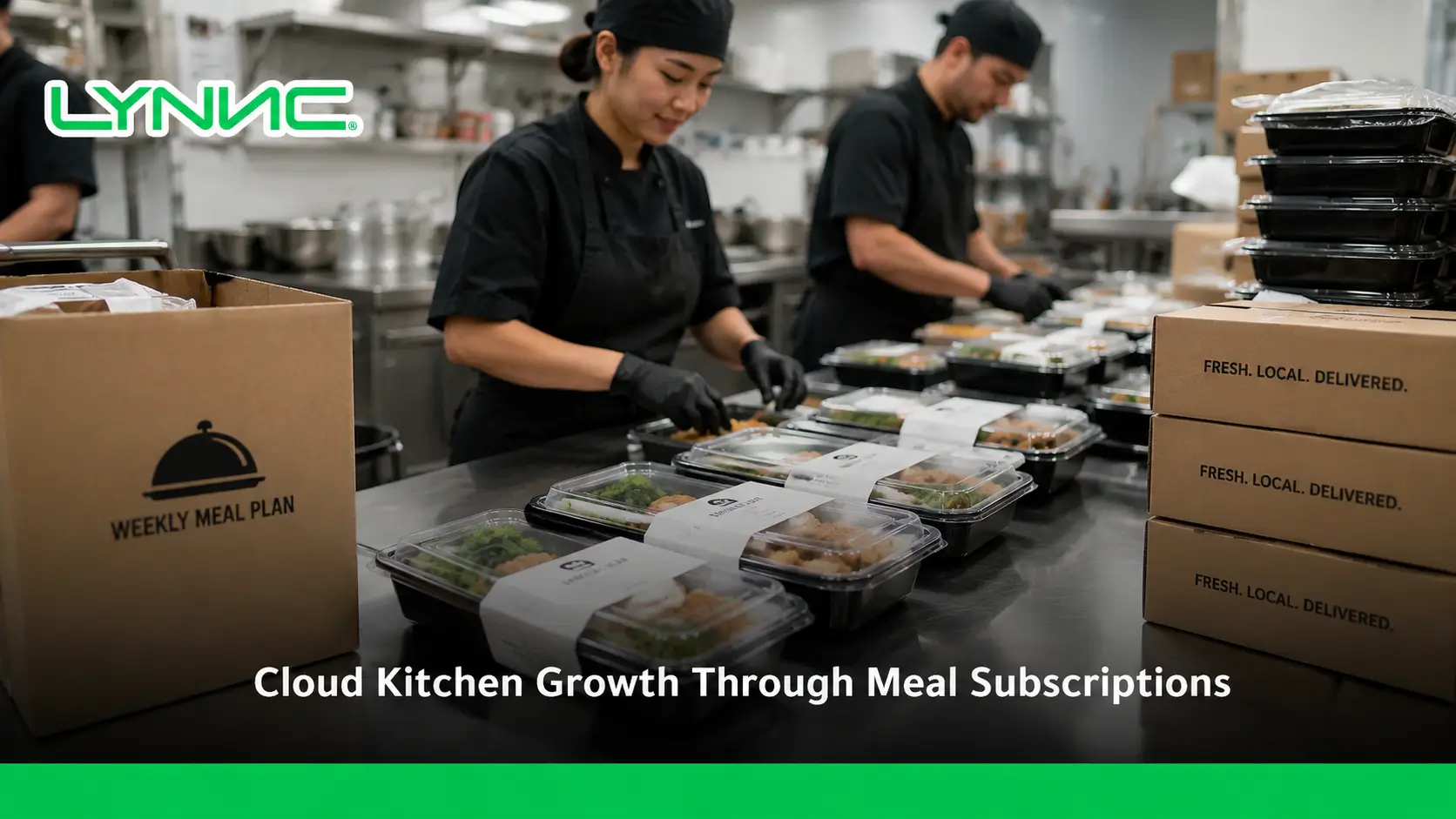
Cloud kitchens need more than high order volumes to achieve sustainable growth. Meal subscriptions create predictable, recurring demand that gives operators clearer visibility into future sales and daily requirements.
LYNNC provides a unified environment for managing this workflow more consistently.
With a steadier order base, kitchens can plan ingredients, staffing, production schedules, equipment use, and delivery capacity more accurately. This reduces operational uncertainty, supports consistent service, and creates a stronger foundation for efficient growth and long-term profitability.
Why Predictable Orders Matter More Than Order Volume for Cloud Kitchens
Predictable demand helps cloud kitchens plan resources around what they are likely to produce and deliver. High order volume is valuable, but unpredictable spikes can increase costs and disrupt operations.
why predictability matters:
- Smarter Inventory Planning: Known demand helps kitchens purchase ingredients closer to actual production needs and reduces unnecessary emergency buying.
- Better Labor Scheduling: Managers can align chefs and packing staff with expected workloads instead of overstaffing quiet periods or struggling during sudden peaks.
- Smoother Delivery Operations: More stable order patterns make it easier to group nearby deliveries and prepare routes before dispatch.
- More Consistent Food Quality: A controlled production flow reduces rush-related mistakes and helps teams maintain preparation and packaging standards.
- Balanced Equipment Usage: Work can be distributed across ovens and preparation stations instead of creating sudden production bottlenecks.
How Meal Subscriptions Create a Repeatable Revenue Layer for Cloud Kitchens
Meal subscriptions turn one-time purchases into recurring weekly or monthly commitments. This creates a steadier revenue base and reduces the pressure to generate every sale from scratch.
The main advantages include:
- Higher Customer Lifetime Value: Subscribers can generate revenue across several weeks or months rather than through a single meal purchase.
- Lower Repeat Acquisition Pressure: Once customers subscribe, the kitchen does not need to repeatedly pay to convince them to make their next purchase.
- Upfront Cash Flow: Prepaid plans can provide working capital before all scheduled meals are produced and delivered.
- Greater Revenue Stability: Recurring plans create a base level of committed sales even when ordinary daily demand slows.
- Stronger Customer Relationships: Regular subscriptions keep customers connected to the brand instead of restarting the buying journey every day.
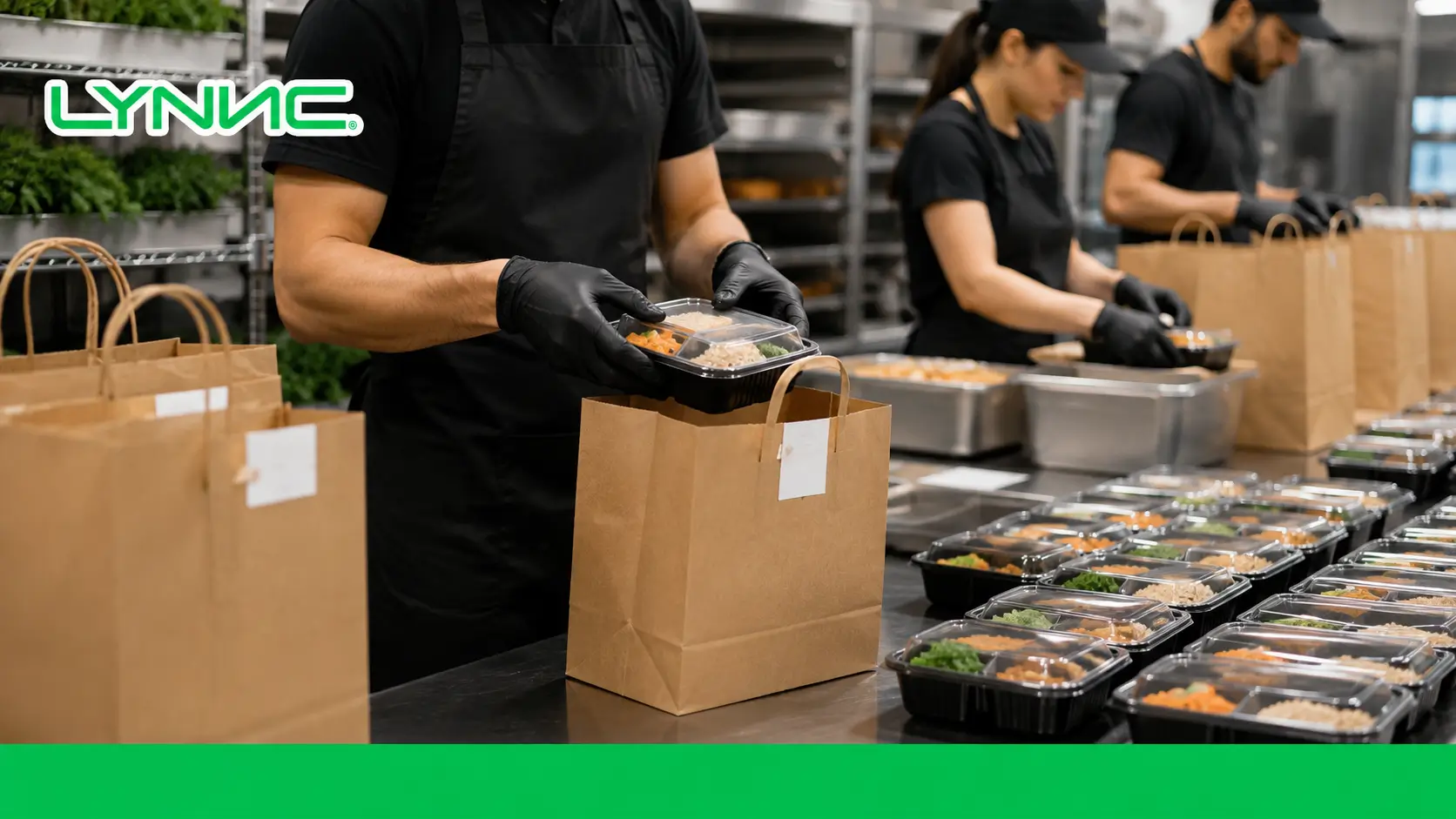
Cloud Kitchen Growth Through Meal Subscriptions
How Subscription Commitments Make Cloud Kitchen Demand Easier to Plan
- More Accurate Purchasing: Confirmed meal counts give procurement teams a clearer estimate of the ingredients and packaging they will need.
- Demand-Based Staffing: Kitchen and packing shifts can be scheduled according to known production volumes rather than daily guesswork.
- Better Off-Peak Utilization: Scheduled meals can be prepared during quieter periods, leaving more capacity available for immediate peak-hour orders.
- Pre-Planned Delivery Zones: Known addresses allow orders to be grouped by neighborhood, route, or delivery window before dispatch.
- Improved Capacity Control: Operators can compare upcoming subscription demand with available kitchen capacity before accepting additional customers.
- More Structured Supplier Planning: Recurring demand makes purchasing cycles easier to organize and coordinate with suppliers.
- Easier Maintenance Scheduling: Predictable production windows allow equipment maintenance to be planned around quieter operating periods.
How Pre-Scheduled Meal Plans Improve Kitchen Production Planning
- Efficient Batch Preparation: Shared ingredients can be cut, marinated, portioned, and prepared together according to confirmed meal volumes.
- Better Equipment Allocation: Cooking tasks can be distributed across ovens and preparation areas to reduce production congestion.
- Clearer Kitchen Workflow: Preparation, cooking, portioning, quality control, and packing can operate as organized production stages.
- More Off-Peak Preparation: Suitable meal components can be prepared during quieter hours while peak capacity remains available for immediate orders.
- Stronger Quality Control: Planned production gives teams more time to check portions, temperatures, packaging, and order accuracy.
- Consistent Portioning: Known meal quantities make standardized recipes and serving sizes easier to apply across every production batch.
Build More Predictable Revenue With Meal Subscriptions
Create recurring weekly and monthly demand instead of relying only on individual meal orders. Give customers a simpler way to maintain regular meal plans while building a more predictable revenue stream.
How Subscription Habits Build Longer Customer Relationships
Meal subscriptions make a cloud kitchen part of the customer's routine instead of requiring a new purchase decision every day. Consistency, convenience, and personalization can gradually turn repeat ordering into stronger retention.
how that relationship develops:
1. Reduce Daily Decision Fatigue
Customers no longer need to search for a meal provider every day when their meals are already planned. The subscription turns repeated food decisions into a simpler routine.
2. Build Convenience Into the Customer’s Schedule
Regular meal and delivery patterns can fit naturally around work, fitness, or family routines. The easier the service becomes to rely on, the stronger the reason to continue using it.
3. Learn From Repeated Customer Preferences
Recurring orders provide more opportunities to understand preferred meals, ingredients, delivery times, and plan choices. These insights can help operators make the experience more relevant over time.
4. Build Trust Through Consistency
Reliable quality, accurate orders, and dependable delivery build confidence through repeated positive experiences. This type of trust is harder to create through a one-time promotion.
5. Reduce the Need to Reconsider Competitors
An active subscription removes part of the need to browse multiple food platforms before each meal. The existing plan becomes the customer's default option.
6. Create Natural Renewal Opportunities
Weekly and monthly cycles provide clear opportunities to encourage renewals, plan upgrades, or additional meals. Retention can therefore become part of the subscription journey itself.
Why Subscription-First Cloud Kitchens Can Scale More Efficiently
- Better Use of Existing Capacity: Scheduled production can fill quieter kitchen hours before operators invest in additional equipment or facilities.
- Stronger Purchasing Power: More predictable ingredient requirements make larger and more structured supplier orders easier to plan.
- Lower-Risk Market Testing: Kitchens can test subscription interest in a new area before committing to a new location.
- Higher Delivery Density: More subscribers within the same neighborhood allow several deliveries to be grouped into fewer routes.
- Clearer Expansion Signals: Recurring demand reveals which areas consistently generate enough business to justify additional capacity.
- More Organized Multi-Brand Operations: Predictable volumes help kitchens allocate production capacity between multiple virtual brands more deliberately.
- More Controlled Growth: Expansion can follow recurring demand patterns rather than temporary promotional spikes.
Why Direct Subscription Orders Give Cloud Kitchens More Control
- Greater Revenue Control: Direct subscriptions reduce dependence on third-party platforms for every recurring transaction.
- First-Party Customer Data: Operators gain clearer visibility into customer preferences, order history, and subscription behavior.
- Better Customer Experience Control: The kitchen can manage plan changes, support issues, and service recovery directly.
- Lower Platform Dependency: Subscribers do not need to rediscover the brand through marketplace rankings before every purchase.
- More Flexible Offers: Operators can control meal quantities, subscription periods, menus, and package structures.
- Stronger Brand Relationships: Repeated direct interaction helps customers build a relationship with the kitchen itself rather than mainly with the delivery marketplace.
Which Cloud Kitchen Models Fit Recurring Meal Plans Best?
Cloud kitchen models built around standardized production and predictable fulfillment are usually best suited to recurring meal plans. The right structure depends on volume, delivery geography, brand strategy, and the level of operational control required.
The most suitable models include:
1. Single-Brand Cloud Kitchen
A single-brand model gives operators direct control over recipes, ingredients, production, packaging, and quality. It works particularly well for focused concepts such as healthy meals, fitness plans, or specialist diets.
2. Shared Kitchen Model
A shared kitchen gives subscription brands access to equipped production facilities without the full investment of building their own kitchen. It can be useful for testing recurring demand before committing significant capital.
3. Hub-and-Spoke Model
A central kitchen can prepare larger meal volumes while smaller distribution points bring orders closer to subscriber areas. This structure becomes increasingly useful when demand is spread across several delivery zones.
4. Multi-Brand Cloud Kitchen
One kitchen can operate several concepts while sharing selected infrastructure and resources. Predictable subscription demand helps managers allocate production capacity more effectively between those brands.
How to Design a Meal Subscription Offer for a Cloud Kitchen
1. Define the Target Customer
Start with a specific recurring need, such as weekday lunches for employees, calorie-controlled meals for health-focused customers, or convenient food plans for families. A clear audience makes the offer easier to design and communicate.
2. Build a Production-Friendly Menu
Use ingredients efficiently across several meals while maintaining enough variety to prevent menu fatigue. Choose dishes that can preserve their intended quality through preparation, packaging, and delivery.
3. Set the Subscription Duration
Decide whether customers can choose weekly, monthly, or multiple-duration plans. The duration should match both customer routines and the kitchen's ability to forecast production.
4. Define the Number of Meals
Plans can include one daily meal, multiple meals, or complete daily packages. Keeping the options clear makes purchasing easier for customers and production easier for the kitchen.
5. Set Delivery Windows
Use defined delivery periods rather than completely open delivery times. Predictable windows make geographic grouping, driver scheduling, and route planning easier.
6. Build Sustainable Pricing
Include ingredients, production, packaging, and fulfillment costs when setting subscription prices. Any discount for longer commitment should encourage retention without weakening unit economics.
7. Establish Subscription Rules
Define how customers can pause, renew, switch meals, or update delivery details before launch. Clear rules reduce manual exceptions as the subscriber base grows.
How Cloud Kitchens Can Connect Subscriptions, Orders, POS, and Delivery
Subscription operations become harder to scale when plans, orders, POS data, kitchen production, and delivery are handled separately. Connecting these workflows reduces manual handoffs and gives teams a clearer view from order creation to fulfillment.
A connected operation should include:
1. Connect Subscriptions to the Order Flow
Confirmed subscription meals should enter the same operational workflow as other restaurant orders. This gives production teams a clearer view of everything that must be prepared.
2. Keep POS and Product Data Aligned
Products, prices, and order information should remain synchronized across systems wherever possible. This reduces repeated manual input and lowers the risk of inconsistent data.
3. Centralize Order Visibility
Teams need one place to see upcoming, active, and completed orders. Centralized visibility makes it easier to manage recurring and immediate demand together.
4. Connect Orders to Kitchen Production
Kitchen teams should know what needs to be produced, in what quantity, and by what time. Clear production information reduces operational confusion.
5. Connect Fulfillment to Delivery
Completed meals should move into dispatch without requiring another disconnected manual process. This creates a smoother transition between kitchen operations and delivery.
6. Use Connected Operational Data
Bringing order and fulfillment data together gives operators a clearer picture of workloads and service performance. This becomes increasingly important as subscription volume grows.
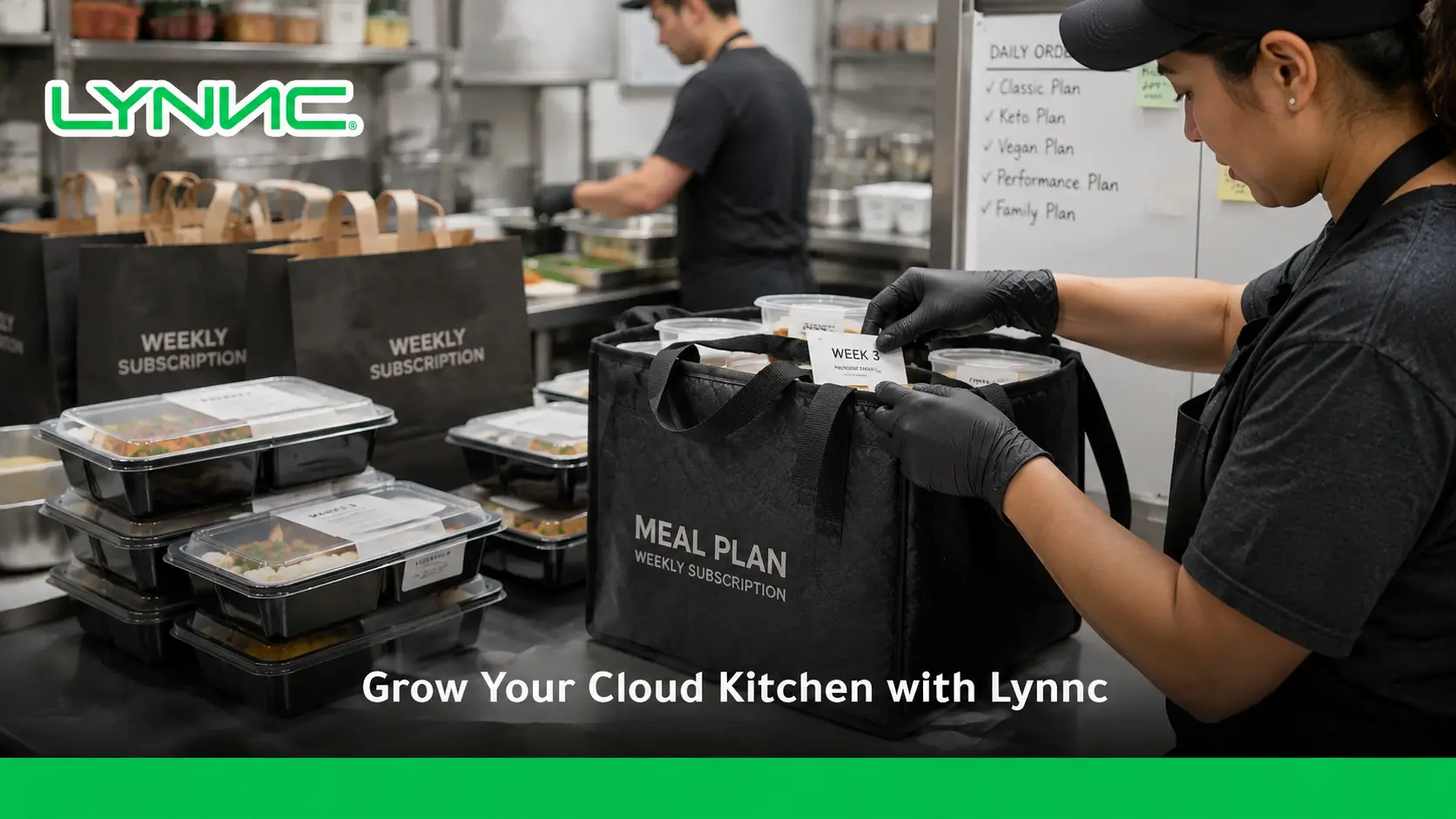
How Recurring Delivery Windows Simplify Subscription Fulfillment
- Earlier Dispatch Planning: Delivery teams can see expected volumes before each fulfillment window starts.
- Geographic Order Grouping: Nearby subscribers can be grouped into the same route rather than dispatched individually.
- More Efficient Routes: Known destinations make unnecessary travel easier to reduce before drivers leave the kitchen.
- Better Driver Scheduling: Managers can estimate how many drivers are required for each delivery period.
- Clear Customer Expectations: Defined windows make expected delivery times easier for subscribers to understand.
- Faster Delay Management: When a route is disrupted, teams can quickly identify which scheduled deliveries are affected.
- More Predictable Fulfillment Capacity: Regular windows reveal how many deliveries the operation can realistically handle within each period.
Turn Your Cloud Kitchen Into a Subscription-Driven Business
Bring recurring meal plans into a more structured operating model and create a clearer path from subscription to recurring fulfillment, Discover LYNNC Meal Subscriptions.
When Is a Cloud Kitchen Ready to Scale Its Subscription Model?
A cloud kitchen is ready to scale when subscriber growth no longer depends on improvising operations every day. Production, delivery, quality, and customer retention should remain stable as recurring demand increases.
Look for these readiness signals:
1. Recurring Demand Is Stable
Subscription volumes should show consistent weekly patterns rather than depending on temporary campaigns or short-term spikes. Stable demand provides a stronger basis for expansion decisions.
2. Kitchen Capacity Is Clearly Measured
Operators should know how much additional volume existing staff, equipment, preparation areas, and storage can handle. Expansion becomes risky when these limits are unknown.
3. Production Standards Are Repeatable
Recipes, portions, preparation steps, packaging, and quality checks should remain consistent as volume increases. Scaling an unstable process usually creates larger operational problems.
4. Delivery Performance Remains Reliable
Higher subscriber numbers should not create repeated delays or fulfillment failures. Delivery capacity needs to grow alongside production capacity.
5. Customers Continue Renewing
Subscriber growth matters more when customers remain beyond their first plan cycle. Consistent renewal indicates that the offer is delivering enough value to support expansion.
6. Operations Can Grow Without More Manual Complexity
Scaling becomes more sustainable when additional subscriptions do not require proportional increases in spreadsheets, manual handoffs, or disconnected processes. The operating model should become easier to repeat as demand grows.
For more context, see Subscription Management for Meal Plans: Changes, Pauses, and Cancellations.
Frequently Asked Questions About Cloud Kitchens in Saudi Arabia
1. What Is the Cloud Kitchen Concept?
A cloud kitchen is a delivery-focused food business that prepares meals without operating a traditional dine-in area. Customers typically order through delivery apps, online ordering channels, or the brand’s own digital platforms.
The model allows operators to focus on kitchen production, packaging, and delivery while avoiding many front-of-house costs associated with traditional restaurants.
2. Is Cloud Kitchen Allowed in Saudi Arabia?
Yes. Cloud kitchens are permitted in Saudi Arabia, and Monsha’at officially recognizes Cloud Kitchen Activity as restaurants that prepare and serve meals for consumption outside the premises. Operators must obtain the applicable commercial and municipal licenses and meet the relevant food-safety and premises requirements.
Licensing requirements depend on the business activity and location, so operators should confirm the latest requirements through the official Balady platform before opening.
3. Which App Is Best for a Cloud Kitchen?
There is no single best app for every cloud kitchen. The right setup depends on customer reach, commissions, order volume, integrations, and whether the business also wants to build a direct ordering channel.
In Saudi Arabia, cloud kitchens commonly consider major delivery channels such as Jahez and HungerStation alongside other available platforms. Using multiple channels can expand reach, while direct ordering can help build a stronger customer relationship.
4. Which City Is Best for a Cloud Kitchen?
Riyadh is often one of the strongest starting markets because of its large urban customer base and concentration of food-delivery demand. Jeddah and the Dammam–Khobar area can also offer strong opportunities depending on the target audience and delivery zone.
The best city is ultimately the one where sufficient order density, suitable rent, target customers, and manageable delivery distances come together.
5. How Do You Start a Cloud Kitchen in Saudi Arabia?
Start by defining the food concept, target customers, delivery area, menu, and financial model. Then establish the business legally, secure an appropriate location, obtain the required licenses, prepare the kitchen, and set up ordering and delivery operations.
Saudi Arabia’s official Cloud Kitchen Activity guide covers the journey from feasibility studies and commercial registration through premises preparation and operations.
6. What License Is Required for a Cloud Kitchen in Saudi Arabia?
A cloud kitchen needs the licenses applicable to its registered food-service activity, including the relevant commercial and municipal licensing. Balady allows businesses to apply for a commercial license by specifying the establishment, activity, location, and premises details.
Food establishments must also comply with the applicable food-safety and facility requirements, so operators should verify the requirements for their exact activity before signing a kitchen lease.
7. How Much Does It Cost to Start a Cloud Kitchen in Saudi Arabia?
There is no fixed startup cost because the investment varies by city, kitchen size, equipment, rent, menu complexity, staffing, licensing, packaging, and delivery model.
A shared kitchen can require considerably less upfront investment than building a private production facility, so operators should calculate costs around the specific concept rather than relying on a single market-wide figure.
8. Can One Cloud Kitchen Operate Multiple Brands in Saudi Arabia?
A cloud kitchen can be designed to produce meals for multiple virtual brands from the same production facility, provided the operation complies with the applicable licensing and activity requirements.
The model works best when menus share selected ingredients and equipment without creating excessive complexity in inventory, preparation, packaging, or order management.
9. Are Cloud Kitchens Profitable in Saudi Arabia?
Cloud kitchens can be profitable when they combine sufficient order density with controlled food, labor, packaging, delivery, and platform costs. Lower front-of-house expenses alone do not guarantee profitability.
Operators still need strong unit economics, efficient production, repeat customers, and a delivery radius that keeps fulfillment costs under control.
10. What Is the Best Location for a Cloud Kitchen in Saudi Arabia?
The best location is not necessarily the most expensive commercial district. A cloud kitchen should be positioned close enough to high-demand neighborhoods to maintain fast and reliable delivery while keeping rent and operating costs sustainable.
Operators should evaluate customer density, delivery radius, rider access, nearby competitors, kitchen suitability, and local licensing requirements before choosing a site.

