


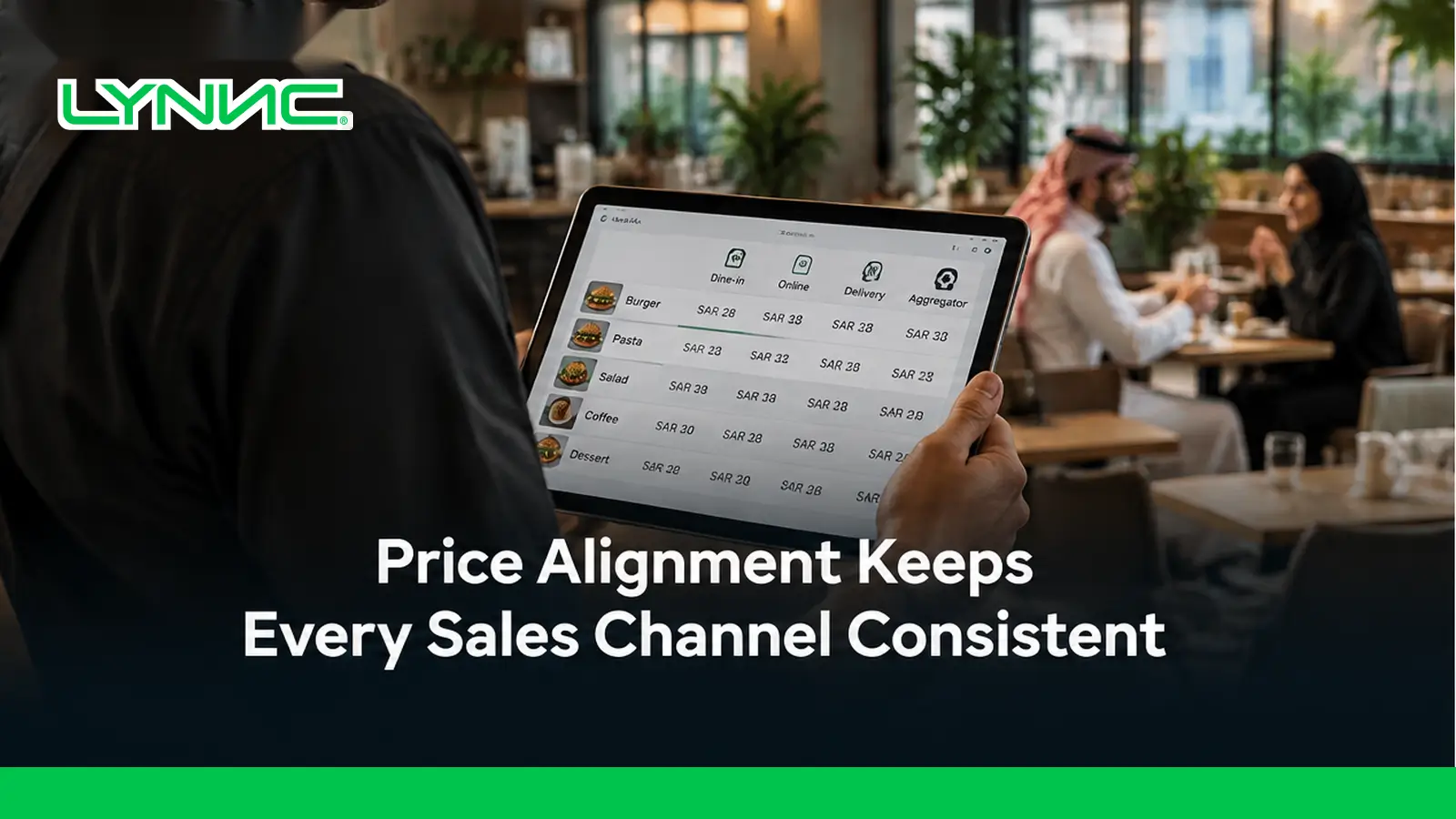
Price alignment across restaurant ordering channels keeps menu pricing accurate, intentional, and consistent across LYNNC restaurant solutions, digital menus, direct ordering, and delivery platforms. It reduces customer confusion, protects margins, limits manual errors, and speeds up menu updates. This guide explains why prices differ, how manual and automated synchronization compare, how POS and API connections distribute updates, the risks of incorrect pricing, and methods for managing multi-channel restaurant pricing efficiently at scale.
smart digital menus helps restaurants manage this workflow through a more connected, centralized process.
What Is Price Alignment Across Restaurant Channels?
Price alignment across restaurant ordering channels means keeping live menu prices consistent with the restaurant’s intended pricing strategy across dine-in, POS, websites, QR menus, direct ordering, and delivery platforms.
Alignment may mean identical prices everywhere, or deliberately different prices by channel when operating costs or commercial agreements require them. LYNNC and DoorDash both describe channel-specific pricing as a controlled strategy rather than an accidental mismatch.
The concept becomes clearer from four perspectives:
Customer Experience Perspective
From the customer’s perspective, price alignment across restaurant ordering channels means seeing pricing that is predictable and understandable wherever an order is placed.
A restaurant may intentionally use different delivery prices, but those differences should reflect a defined strategy rather than outdated menus or inconsistent updates.
Transparency and Loyalty Perspective
Price alignment is also a transparency practice that helps customers understand what they are being charged.
When prices, promotions, and fees are managed clearly across channels, customers face fewer unexpected differences and can make purchasing decisions with greater confidence.
Brand Management Perspective
From a brand perspective, price alignment across restaurant ordering channels protects the restaurant from avoidable confusion.
Accidental price differences between a digital menu, POS, website, and delivery application can make the business appear poorly managed even when the issue is only an outdated menu.
Operational Perspective
Operationally, price alignment means controlling pricing rules from a reliable source and distributing approved changes to the required channels.
Centralized menu systems can manage products, prices, modifiers, availability, and branch-specific rules without requiring staff to recreate every change manually.
Why Price Differences Happen
Different ordering channels can carry different costs, workflows, and commercial requirements. For that reason, price alignment across restaurant ordering channels should focus on keeping every live price intentional rather than assuming every channel must always display an identical number.
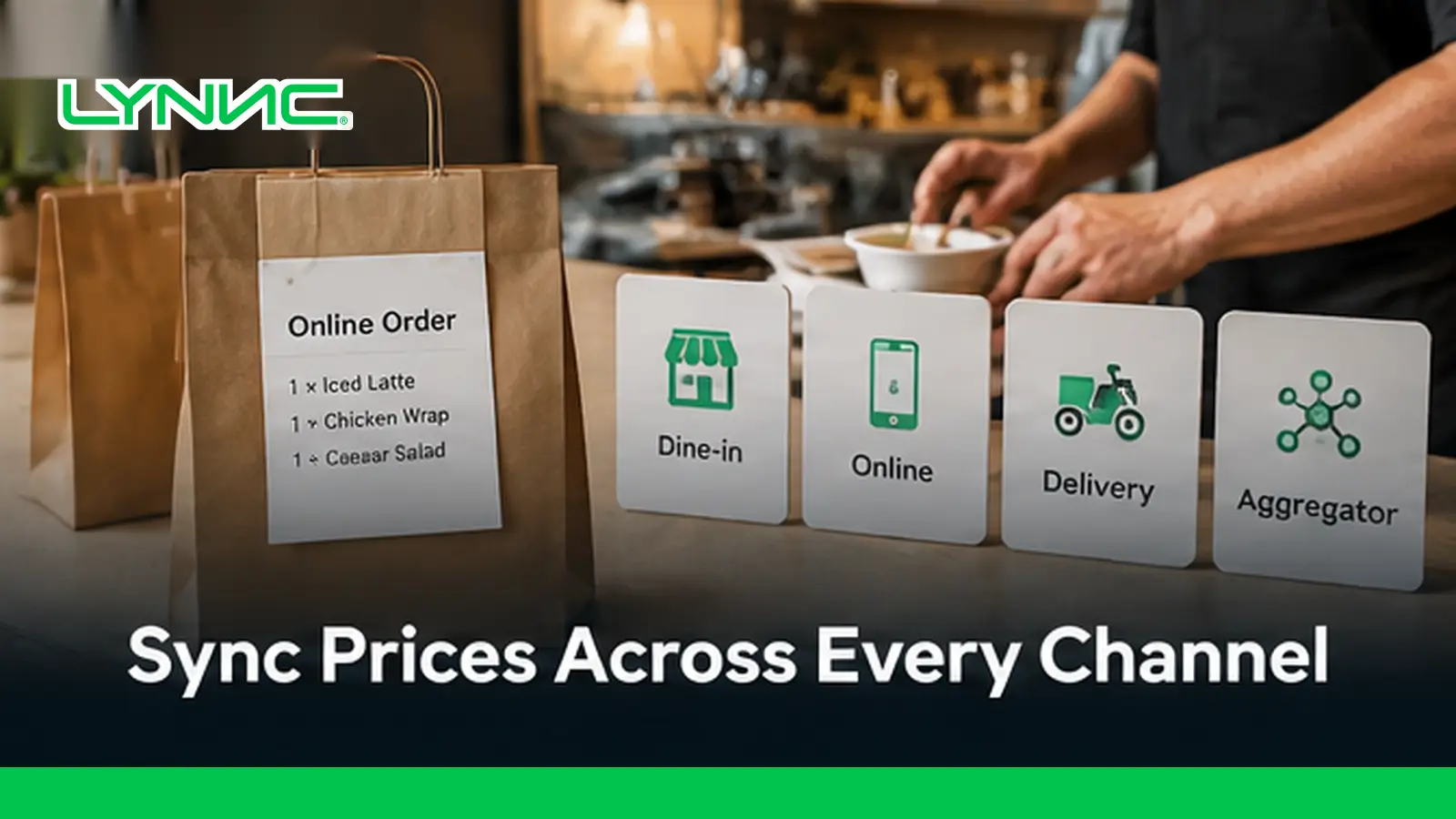
The main differences usually appear across these three channels:
POS Prices
POS pricing often acts as the restaurant’s core or reference price.
- Base Price: The POS can hold the main price used for direct restaurant transactions.
- Direct Transaction: Orders placed directly with the restaurant do not depend on a third-party marketplace for customer acquisition.
- Pricing Reference: A centralized POS can serve as a reference point for connected menu and ordering systems.
Modern platforms can also use several pricing rules or channel-specific prices instead of one universal value.
Delivery App Prices
Third-party delivery channels may have a different cost structure from direct restaurant orders.
- Channel Costs: Restaurants may face different platform, fulfillment, promotion, or operational costs depending on the delivery partner.
- Channel-Specific Pricing: Some systems allow separate prices for individual delivery channels.
- Controlled Difference: A higher delivery price is easier to manage when it is deliberate and synchronized rather than created by inconsistent manual updates.
DoorDash explicitly supports differentiated pricing by platform, while Foodics-connected systems can control pricing and menus across several delivery providers.
Digital Menu Prices
A direct digital menu can connect customer-facing menu data with the restaurant’s wider operating environment.
- Direct Control: Restaurants can control prices, descriptions, modifiers, images, and availability.
- Fast Updates: Connected systems can publish changes without repeatedly rebuilding the menu.
- Direct Offers: Restaurants can use direct channels for loyalty offers or selected promotions when the commercial strategy allows it.
LYNNC’s (Digital Menu) supports instant changes to pricing and content across its connected environment.
Manual Price Updates vs Automatic Price Synchronization
Manual updates can work for a very small operation, but complexity rises quickly when a restaurant manages several branches, menus, delivery providers, and promotional campaigns.
Automatic menu synchronization reduces repeated editing by distributing approved menu information through connected systems.
Foodics integrations such as FoodiZone, Blend, and Deliverect describe centralized menus, real-time price control, and synchronization across connected ordering channels.
How POS Integration Maintains Price Alignment
POS integration supports price alignment across restaurant ordering channels by connecting operational menu data with customer-facing ordering channels instead of treating each platform as an isolated system.
The main controls include:
- Central Pricing Source: The POS or designated menu-management system can hold the approved product and price records used by connected channels.
- Channel Price Rules: Restaurants can maintain intentional differences for selected apps, locations, or order types instead of creating separate unmanaged menus.
- Faster Price Publishing: A price change can move from the master system to connected ordering interfaces without repeated manual entry.
- Promotion Coordination: Connected systems make it easier to schedule or remove promotions consistently across supported channels.
- Availability Synchronization: Price management can work alongside stock availability, preventing customers from ordering products that are no longer available.
- Cleaner Product Mapping: The same product ID, modifier, and price relationship can remain connected across the POS and digital channels.
- Better Reporting: Integrated systems can make it easier to compare product and channel performance using consistent transaction records.
LYNNC states that its environment can connect existing POS, inventory, and delivery tools, while Foodics integrations also support central menu, price, and availability management.
A connected (restaurant management software) environment is therefore most valuable when it becomes a reliable control layer rather than another separate system requiring duplicate data entry.
How APIs Synchronize Menu Prices
Step 1: Update the Master Price in the POS
- Change the Main Record: The restaurant manager updates the approved product price in the central system.
- Select the Relevant Channel: The pricing rule determines which branches or ordering channels should receive the change.
- Save the Update: The system records the new value and prepares it for distribution.
Step 2: Trigger the API Request
- Create the Request: The connected system generates a request containing the changed menu data.
- Identify the Product: Product IDs or mapped identifiers ensure the correct menu item is updated.
- Package the Data: Price, modifiers, tax logic, and availability information can be included where supported.
This is the core role of API integration: allowing separate systems to exchange structured information instead of requiring staff to copy it manually. LYNNC describes APIs as part of the connection layer between POS, delivery, and ordering systems.
Step 3: Transfer Data to Connected Channels
- Structured Format: Systems commonly exchange data in structured formats such as JSON.
- Secure Connection: Authentication and access controls help ensure only authorized systems exchange data.
- Channel Distribution: The integration sends the relevant update to the required connected platforms.
Step 4: Process the Update on Each Platform
- Receive the Data: The destination system receives the new menu information.
- Match the Item: Product mapping connects the incoming record with the correct menu item.
- Validate the Update: The receiving system checks whether the data can be processed correctly.
Accurate mapping is essential because synchronization cannot correct a product that has been linked to the wrong menu item or modifier.
Step 5: Publish the New Customer-Facing Price
- Replace the Old Value: The connected platform updates the applicable price.
- Refresh the Interface: Customers see the revised information once the platform publishes the change.
- Confirm Status: Integration systems can record whether the update succeeded or requires attention.
The exact publishing time depends on the POS, middleware, API, and destination platform, so “real time” should be understood according to the capabilities of the connected systems rather than assumed universally.
Business Risks of Incorrect Pricing
Incorrect or delayed updates weaken price alignment across restaurant ordering channels and can affect profitability, trust, reporting, and daily operations.
The main risks fall into three areas:
Margin Loss
Incorrect pricing can quietly reduce the profitability of a menu item.
- Unaccounted Channel Costs: A price may no longer support the commercial model of a delivery channel.
- Outdated Food Costs: A restaurant may continue selling at an old price after ingredient or operating costs change.
- Incorrect Manual Entry: A simple input mistake can place the wrong price in front of customers.
- Promotion Errors: Old discounts may remain active when they should have expired.
Deliberate channel-specific pricing can help restaurants account for different platform costs, but the live price still has to match the intended rule.
Customer Complaints
Customers notice unexplained price differences quickly.
- Trust Problems: Unintentional differences can make pricing appear unfair.
- Customer Confusion: A guest may see one price on the website and another on a delivery platform without understanding why.
- Abandoned Orders: Unexpected pricing can discourage customers from completing the purchase.
- Negative Feedback: Pricing disputes can turn into poor reviews or support complaints.
Accurate pricing is one reason LYNNC positions real-time menu updates as a way to improve transparency and customer trust.
Operational Errors
Pricing problems also create additional work for restaurant teams.
- Manual Corrections: Cashiers or managers may need to resolve discrepancies during service.
- Accounting Differences: The POS record may not match the price actually charged on another channel.
- Order Cancellations: Severe pricing errors may require staff to cancel or correct an order.
- Staff Distraction: Employees spend time managing data problems instead of serving customers.
- Reporting Noise: Inconsistent menu records make product and channel comparisons harder.
Foodics and its integration partners specifically position centralized ordering and menu management as ways to reduce repeated entry and operational errors.
Best Practices for Multi-Channel Price Management
- Create One Pricing Authority: Decide which system owns the master product and pricing records.
- Define Channel Rules Clearly: Document which channels use the base price and which are allowed to use a different price.
- Use Reliable POS Integration: Keep operational products connected with the menus customers actually see.
- Enable Menu Synchronization: Publish approved price and availability changes across supported channels instead of repeating edits manually.
- Use API Integration Carefully: Monitor product mapping, authentication, failed updates, and unsupported fields.
- Keep Product IDs Consistent: Stable identifiers reduce the risk of updating the wrong product or modifier.
- Coordinate Promotions: Schedule start and end times so discounts do not remain live unintentionally on one channel.
- Check Availability With Pricing: Avoid maintaining a correct price for an item that customers cannot actually order.
- Audit High-Volume Products First: Regularly compare prices for best sellers and high-margin items across active channels.
- Review Branch-Level Rules: Multi-location restaurants may require location-specific prices, products, and availability.
- Explain Deliberate Price Differences: Transparency is better than allowing customers to assume an inconsistency is an error.
- Monitor Integration Status: Automation still requires oversight; failed synchronization should be identified before it affects many orders.
- Review Financial Reports: Compare channel revenue and POS records to identify unexpected pricing gaps.
Modern systems from LYNNC, Foodics, Toast, and Deliverect all illustrate the same operational principle: central control and connected publishing reduce duplicate menu work.
How LYNNC Synchronizes Restaurant Pricing
LYNNC approaches price alignment across restaurant ordering channels through connected menu management rather than requiring restaurants to rebuild the same information in every channel. Restaurants evaluating automated price changes can also review AI dynamic pricing for restaurants alongside price alignment across supported channels.
Its current restaurant tools describe several relevant capabilities:
- Connected POS Data: LYNNC can connect existing POS systems with its menu and ordering environment.
- Central Menu Control: Products, prices, modifiers, descriptions, images, and availability can be managed from a connected structure.
- Instant Menu Changes: Its digital menu supports rapid pricing and content updates.
- Delivery Connectivity: Connected delivery channels can receive approved menu changes without separate manual recreation.
- Channel-Specific Control: Restaurants can still use different pricing or menu rules when the commercial model requires them.
- Availability Updates: Sold-out products and operational changes can be reflected across connected customer channels.
These capabilities are documented across LYNNC’s current digital menu, menu-management, inventory, and integration content.
For restaurants managing POS, direct orders, QR menus, several delivery apps, or multiple locations, centralized synchronization can replace repetitive menu editing with a more controlled pricing workflow.
Explore LYNNC to see how its digital menu, ordering, POS connectivity, and integration environment can support more consistent multi-channel restaurant operations.
related guide: Upselling Techniques in Restaurants Using a Digital Menu
Frequently Asked Questions About Restaurant Price Alignment
What Are the Immediate Benefits of Updating Menu Pricing Across All Channels at Once?
The main benefits are speed, fewer repeated edits, lower risk of inconsistent live prices, and a clearer customer experience.
It also allows restaurant teams to spend less time maintaining separate menu records.
Does Price Alignment Mean Every Channel Must Have the Same Price?
No.
A restaurant can intentionally use different prices by delivery platform, branch, or order type. Alignment means each live price correctly reflects the restaurant’s approved pricing strategy.
How Does POS Integration Help With Menu Prices?
POS integration connects menu and transaction data with other restaurant systems.
When the POS or another designated system acts as the master record, connected platforms can receive approved price and product updates without repeated manual entry.
What Is the Role of API Integration in Menu Synchronization?
API integration allows connected systems to exchange menu data programmatically.
It can carry prices, product identifiers, modifiers, availability, and other supported information between POS, menu-management systems, and ordering platforms.
Can a Digital Menu Use Different Prices From Delivery Apps?
Yes.
A restaurant may use its direct digital menu for base pricing while applying separate prices on third-party platforms where commercial costs differ.
The important requirement is that those differences are deliberate, controlled, and kept up to date.
Can Automated Synchronization Completely Eliminate Pricing Errors?
No.
Automation reduces repeated manual work, but incorrect product mapping, failed integrations, wrong pricing rules, or bad source data can still produce errors.
Restaurants should continue monitoring synchronization status and comparing live channels with the master pricing records.
Accurate pricing across restaurant channels is less about forcing every platform to display an identical number and more about ensuring every customer sees the price the restaurant actually intended for that channel.
By combining clear pricing rules, centralized menu ownership, POS integration, API integration, and reliable menu synchronization, restaurants can protect margins, reduce manual work, and create a more consistent ordering experience.

