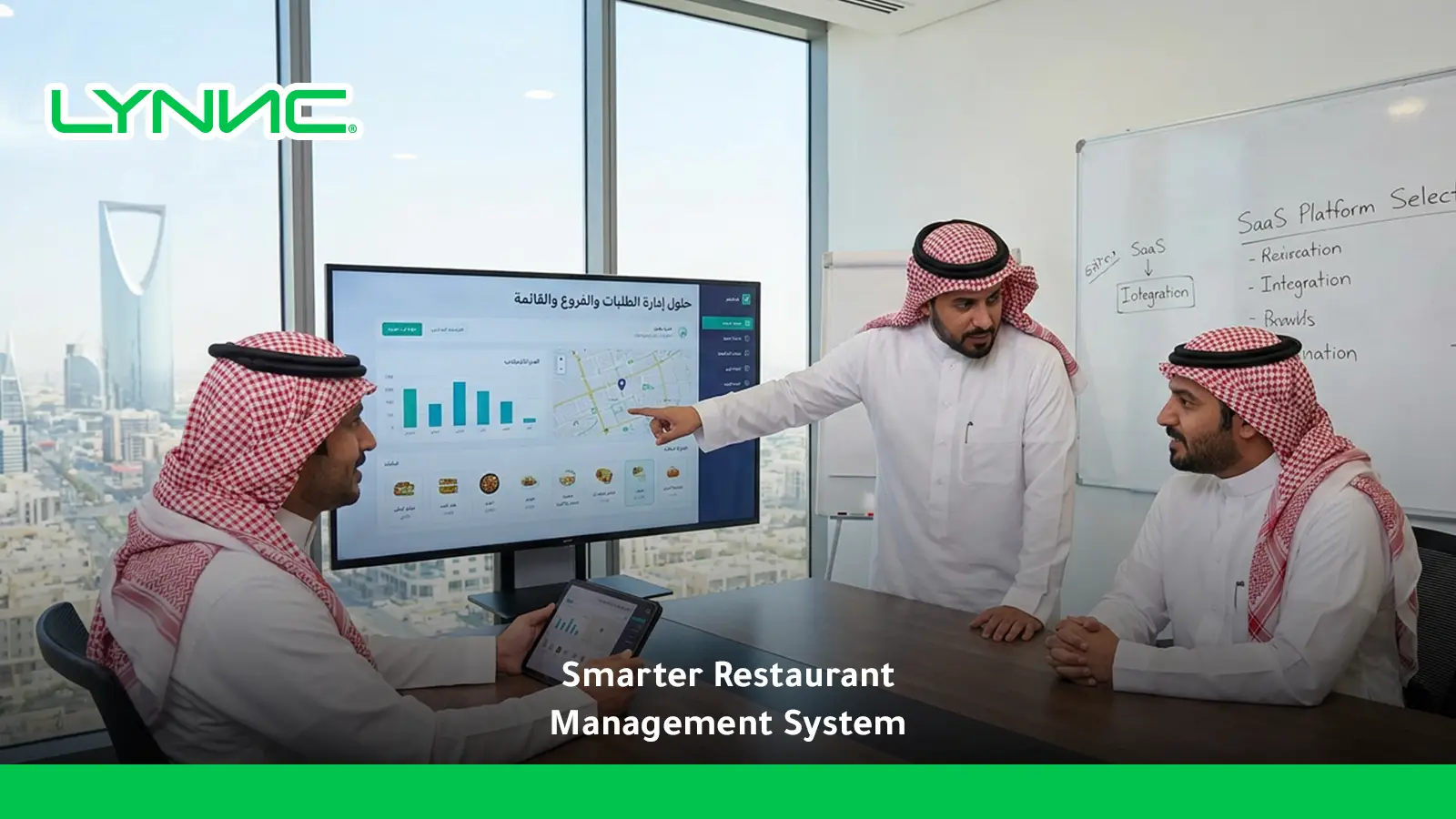
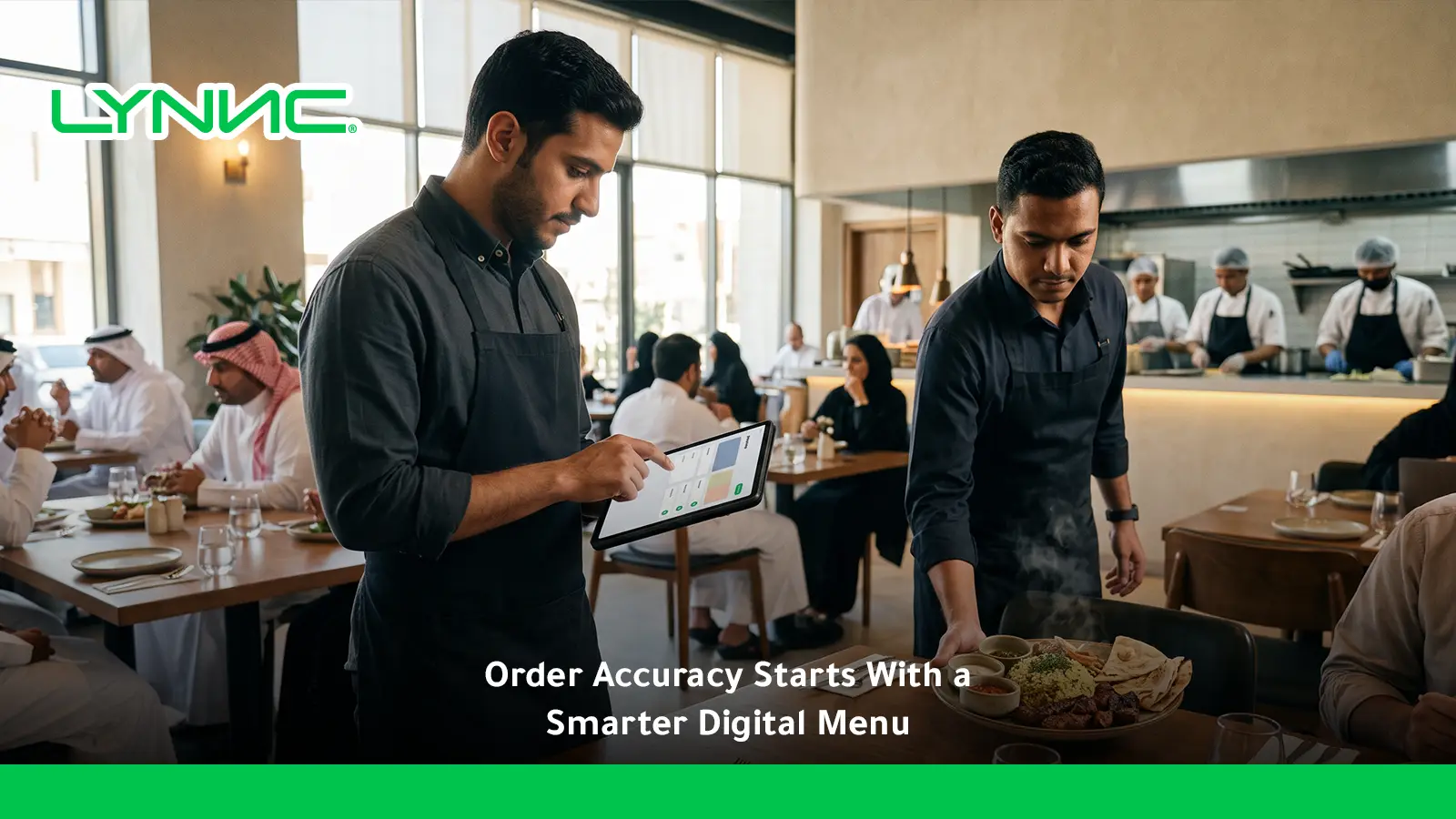
Order management software designed specifically for food service operations solves the critical fulfillment challenges that generic enterprise platforms cannot address. While traditional retail systems orchestrate static parcel shipping and warehouse inventory over days, dining establishments must coordinate rapid ingredient prep, nested modifiers, kitchen station routing, and third-party delivery dispatch within minutes. For multi-branch restaurant brands and cloud kitchens across Saudi Arabia, selecting an industry-tailored system prevents cashier tablet clutter, eliminates manual re-entry mistakes, and ensures seamless compliance with local tax and aggregator standards. This procurement checklist provides food and beverage leadership with an evaluation framework to choose the ideal software partner.
Define the restaurant order problem before shopping
Before reviewing software vendor brochures or scheduling product demonstrations, restaurant leadership teams must clearly diagnose the operational friction degrading their unit economics. In food service, ordering problems do not mirror generic e-commerce supply chains. In standard retail, an order placed at 2:00 PM can be picked, packed, and labeled in a fulfillment center hours later; in a restaurant, a ticket placed during the 8:30 PM dinner rush must be validated, fired to prep stations, cooked, packaged, and handed to a courier within 15 to 20 minutes.
Generic enterprise platforms from legacy providers—such as those discussed in IBM Think's order management framework—are designed for multi-day logistics, freight tracking, and regional distribution centers. When applied to high-velocity dining, they fail to manage the frantic reality of front-counter tablet clutter, kitchen display station routing, and instant ingredient exhaustion.
Common operational bottlenecks that demand specialized order management software include:
The Multi-Tablet Bottleneck: Cashiers manage five to ten separate tablets from delivery aggregators (Jahez, HungerStation, Toyou, Keeta), manually typing incoming tickets into the point-of-sale terminal. This creates cashier queues and introduces a 4% to 8% manual order entry error rate.
Delayed Kitchen Order Ticket (KOT) Firing: When digital orders sit unacknowledged on separate merchant tablets, kitchen prep starts late, delivery drivers wait in crowded restaurant lobbies, and food arrives cold at the customer's doorstep.
Unsynchronized Item Availability: Running out of key ingredients during peak hours requires manual updates across each aggregator portal. Before staff can update every app, multiple orders for out-of-stock items have already been processed, triggering costly cancellations.
If your front-of-house staff is already experiencing order bottlenecks and manual ticket errors, review our operational analysis on theOrder Management System: Signs Your Restaurant Needs One to assess your current workflow maturity.
Order channels and POS integration requirements
A modern hospitality brand operates across diverse sales streams that must feed into a single operational funnel. An effective restaurant order management engine aggregates these disparate ordering streams and establishes two-way communication with the core point of sale. For the wider systems architecture behind these connections, review restaurant management system in Saudi Arabia.
Primary order channels that the software must ingest simultaneously include:
Third-Party Aggregators: Automated ingestion via pre-built delivery app integrations connecting local delivery players (including Jahez, HungerStation, Toyou, Keeta, Careem, and The Chefs).
Direct Digital Ordering: Branded mobile applications, responsive web ordering portals, and social commerce ordering links.
On-Premise Physical Channels: Front-counter POS terminals, self-ordering kiosks, drive-thru order displays, and at-table QR code ordering systems.
Centralized Phone & Catering: B2B bulk catering contracts and central call-center dispatch.
To avoid disjointed operations, bidirectional POS integration is non-negotiable. Superficial one-way integrations that simply print kitchen chits are inadequate. A true bidirectional connection must: The distinction between the transaction layer and the order orchestration layer is explained in POS system vs order management.
Inject Orders Directly into POS Memory: Ingest digital tickets into the POS queue as paid transactions, complete with accurate tax classifications, discounts, tips, and delivery surcharges.
Bi-Directional PLU Mapping: Match external aggregator SKU IDs to internal POS Price Look-Up (PLU) numbers instantaneously to ensure kitchen line cooks receive precise recipe specifications.
Local Fiscal Compliance: Comply with regional regulatory frameworks, such as Phase 2 ZATCA electronic invoicing in the Kingdom of Saudi Arabia, ensuring all digital transactions generate compliant cryptographic signatures and QR codes automatically.
Workflow and operational acceptance criteria
When conducting technical evaluations, food service operators should hold vendors to strict operational acceptance standards:
Sub-3-Second Ingestion Latency: The duration between customer payment on a delivery app and ticket generation on the POS and KDS must not exceed 3 seconds.
Dynamic Kitchen Station Splitting: The system must parse complex orders and route specific items to designated prep lines (e.g., beverages and cold salads to the pantry station, burgers to the grill, packaging chits to the expeditor window).
Automated Courier Handshake: Automated webhook callbacks that alert delivery aggregators when an order is at 80% prep completion, synchronizing courier arrivals with kitchen boxing.
Offline Failover Protection: If the branch loses internet access, local hardware agents must queue incoming tickets, print orders locally, and reconcile transactions once network connectivity resumes without generating duplicate entries.
Restaurant-specific menus and modifiers
Unlike retail products with fixed barcodes, restaurant menus are highly customizable, time-dependent, and branch-specific. An order management platform must handle dynamic culinary rules effortlessly.
Core menu capabilities required for food service include:
Multi-Level Nested Modifiers: Food service relies heavily on customizations (e.g., cooking temperatures, side dish substitutions, sauce choices, extra toppings, allergen omissions). The software must support complex nested modifier trees with independent price differentials, mandatory selection rules, and maximum limits across all connected channels.
Instant Centralized 86-ing: When a kitchen runs out of avocado or ribeye steaks, branch supervisors must be able to toggle the item or modifier unavailable with a single tap in the multi-branch order hub. That change must broadcast to all connected delivery channels in under 10 seconds, stopping unfulfillable orders.
Channel-Specific Price Differentiation: Operators often implement differentiated pricing on third-party aggregators compared to in-store menus to offset commission costs. The system must support channel markup rules while referencing a unified master recipe catalog.
Daypart Schedule Sync: Automated transitions between morning breakfast, afternoon lunch, and late-night menus that synchronize across all platforms without human intervention.
A specializedLYNNC restaurant operations platform demonstrates how modern software solves these culinary complexities, giving brand managers central control over catalog taxonomy while granting local branch supervisors the agility to manage stock availability in real time.
Exception handling and order cancellation controls
In high-volume kitchen operations, exceptions are an everyday reality. How an order management platform handles cancellations and operational disruptions directly dictates kitchen food waste, guest satisfaction, and chargeback dispute recovery.
Key exception handling workflows include:
Prep-Aware Cancellation Rules: Built-in cancellation rules based on prep status. If a customer cancels an order after the kitchen has started cooking, the system must notify the aggregator to issue merchant compensation rather than silently deleting the ticket from the POS.
Kitchen Auto-Pause ("Rush Mode"): When incoming order volume exceeds kitchen capacity, store managers must have the ability to toggle an automated prep delay (+15 or +30 minutes) or initiate a temporary channel pause to protect kitchen staff and maintain food quality.
Structured Substitution Workflows: Clear protocols for contacting customers or aggregator support when a specific ingredient is exhausted, allowing validated dish substitutions without canceling the entire order.
Immutable Audit Timestamps: Detailed digital logs documenting order arrival, kitchen firing, bump bar completion, courier pickup, and dispatch handover. These time-stamped records provide indisputable proof during aggregator reconciliation audits and dispute reviews.
Security, reliability and vendor support
Because an order management platform sits directly in the cash-flow pipeline of a restaurant business, system downtime during Friday night dinner rushes results in thousands of dollars in lost revenue and immediate brand damage.
When vetting software vendors, mandate rigorous technical commitments:
High-Concurrency Cloud Infrastructure: Architecture capable of handling 10x traffic spikes during promotional campaigns, national holidays, and adverse weather conditions without dropped tickets or API timeouts.
Role-Based Access Control (RBAC): Granular permissions ensuring that kitchen line cooks cannot modify pricing or view financial reports, while store supervisors can toggle 86-ing statuses, and corporate directors can adjust menu pricing across entire territories.
Data Encryption & Local Compliance: Full end-to-end TLS encryption for data in transit, AES-256 for data at rest, and compliance with local Saudi cloud data residency regulations (including National Data Management Office / NDMO guidelines).
Mission-Critical Support Escalation: Guaranteed live technical support during active operating hours (typically 7:00 AM to 2:00 AM daily), backed by direct telephone hotlines and dedicated operational chat rather than generic email ticketing.
Cost and SLA comparison matrix
Evaluating vendor offerings requires analyzing the total cost of ownership alongside contractually binding service level agreements. The comparison table below contrasts the three primary architectural approaches available to restaurant operators:
Evaluation Dimension | Legacy Generic Enterprise OMS (e.g., Retail Suites) | Specialized Restaurant Order Hub (e.g., Lynnc) | Standalone POS Built-in Module |
Target Operation | E-commerce retail, parcel logistics, freight | Multi-branch restaurants, QSR chains, cloud kitchens | Single-location cafes and small diners |
Delivery App Integrations | Requires expensive custom middleware development | Pre-built bidirectional sync with all major local delivery apps | Limited; typically supports only 1 or 2 regional apps |
Modifier & Recipe Mapping | Flat product SKUs; poor nested modifier support | Native multi-level modifier trees and instant 86-ing | Basic in-store modifiers; poor external sync |
Fulfillment Timeline | Days or hours (warehouse picking & packing) | Minutes (live kitchen firing and courier dispatch) | Immediate table-side or register printing only |
Vendor SLA (Uptime Guarantee) | 99.9% (standard corporate enterprise hours) | 99.95% (24/7 restaurant peak coverage and failover) | 99.0% (business hours email support) |
Critical Incident Response (P1) | Under 1 hour | Under 15 minutes during active kitchen service | 4 to 8 hours |
Pricing Model | Heavy enterprise setup fees + annual licensing | Predictable flat monthly SaaS fee per branch | Free add-on or nominal monthly terminal fee |
When reviewing contracts, ensure that the vendor SLA specifies clear financial credits for downtime and defines the vendor's legal responsibility for maintaining aggregator API compatibility as third-party platforms update their codebases.
Pilot acceptance checklist for Saudi restaurants
Before committing to a brand-wide software rollout across your branch network in Saudi Arabia, conduct a structured two-to-four-week pilot program in high-volume branches (such as Olaya in Riyadh or Rawdah in Jeddah). Validate the platform against this 8-point acceptance checklist:
ZATCA Phase 2 E-Invoicing Compatibility: Confirm that digital delivery orders injected via the OMS generate valid cryptographic invoices with Phase 2 QR codes without distorting tax accounting or delivery commission ledgers.
Local Aggregator Live Sync: Test live bidirectional order injection and menu publishing across primary local delivery platforms, including Jahez, HungerStation, Toyou, Keeta, and The Chefs.
Bilingual Arabic/English Rendering: Verify that modifier customizations, customer dietary requests, and kitchen tickets print cleanly without font distortion, reversed Arabic strings, or encoding corruption.
Peak Rush Stress Testing: Verify system performance during peak dinner hours (8:00 PM to 11:30 PM on Thursdays and Fridays), ensuring zero order drops or communication lags during high concurrency. For a deeper operational framework, see restaurant order management at peak hours.
Modifier Tree Mapping Accuracy: Test at least 25 multi-level customized menu combinations (e.g., sauce on side, double cheese, gluten-free bun, special cooking temperature) to verify 100% accurate translation onto kitchen bump bars.
Real-Time 86-ing Propagation: Confirm that when an ingredient is marked unavailable in the hub, it reflects as out of stock across all connected delivery apps within 10 seconds or less.
Cancellation & Refund Handling: Initiate simulated order cancellations at various stages (pre-kitchen, cooking, ready for pickup) to verify that kitchen screens update immediately and inventory deductions remain accurate.
Daily Financial Reconciliation: Compare OMS settlement reports against POS sales totals, delivery aggregator payout statements, and payment gateway receipts for 14 consecutive days to ensure reconciliation discrepancies remain under 0.1%.
Choosing the Right Order Management Partner
Operating a high-performing restaurant brand requires matching culinary excellence with operational efficiency. Deploying specializedrestaurant order management software eliminates the chaos of managing fragmented merchant tablets, empowers kitchen crews to focus on quality cooking, and ensures customers receive accurate, hot meals on time.
Choose Better Order Management Software: Ready to streamline your multi-channel delivery operations and eliminate manual order entry errors? Evaluate restaurant order management with LYNNC to discover how an enterprise order hub connects your POS, kitchen, and delivery aggregators across Saudi Arabia.
Evaluate restaurant order management with LYNNC
Frequently Asked Questions about order management software
What is restaurant order management software?
Restaurant order management software is a centralized technology platform that consolidates, organizes, and orchestrates food orders originating from multiple sales channels—including third-party delivery apps, direct mobile apps, web ordering portals, self-service kiosks, and in-store cash registers. It acts as an intelligent communication hub between ordering channels, kitchen display systems (KDS), delivery couriers, and point-of-sale accounting databases, eliminating the need for manual order re-entry and front-counter tablet clutter.
Is a POS system sufficient?
While a modern POS manages in-store financial transactions, dining room tables, and physical receipts, most standalone POS systems lack native, actively maintained bidirectional integrations with multiple external delivery apps. Without a dedicated order management platform, staff are forced to manage a separate physical tablet for every delivery app and manually re-enter orders into the POS, leading to order entry mistakes, delayed kitchen prep, and desynchronized stock levels. A dedicated order management engine complements the POS by consolidating all external channels into a single, automated operational flow.
Which integrations should the buyer test?
Buyers should rigorously evaluate three foundational integration layers prior to signing: first, bidirectional point-of-sale (POS) synchronization to ensure orders post automatically into terminal sales ledgers; second, pre-built two-way delivery app integrations with dominant regional aggregators (e.g., Jahez, HungerStation, Keeta, Toyou); and third, back-of-house operational connections, including Kitchen Display Systems (KDS), kitchen ticket printers, and inventory management software for real-time stock deductions.
How do you estimate the total cost?
Estimating the total cost of ownership (TCO) requires calculating both direct software fees and operational cost savings. Direct costs typically include onboarding setup fees, monthly per-branch SaaS subscription charges, and optional channel connection add-ons. Operational factors must also be weighed against these fees: factor in the substantial labor savings from eliminating manual tablet re-entry, the reduction in food waste from cancellation errors, and the recovery of lost revenue caused by delayed kitchen ticket firing during peak operating hours.